Is B2B Cold Email Still Working in 2026?
By Simon Severino, founder of Strategy Sprints, where 2,400+ B2B founders have gone through our programs. Updated October 2026.
Yes, B2B cold email still works in 2026, but not as volume blasting. It works as a short, researched first touch to the right person at a dated moment, like a founder who posted a sales job this month. Send it from a separate domain, open a conversation instead of pitching, and give every message a verdict each week: keep the winners, kill the losers. 🐬
You stop writing for a list and start writing for one person on one Tuesday. Fewer emails, more real conversations, a pipeline that doesn't eat your evenings.
Why does it feel like cold email stopped working?
Because spray-and-pray stopped working. Buy a list, write one template, send thousands, hope.
Bought lists go stale fast, and filters bury bulk mail. Readers spot a mail merge in line one: the fake compliment, the "quick question", the pitch in sentence two.
So the channel isn't dead. The volume playbook is. A short note to the right founder, about something true in their week, still gets read. It sounds like a note from a peer, not a campaign. 🐯
Who should I send B2B cold email to in 2026?
To people with a dated reason to talk now. A job title tells you who they are. A fresh trigger tells you why this week.
Our favorite trigger: a founder who is hiring salespeople right now. A live sales-role posting from the last 30 to 90 days tells you three things. They've decided to grow. They're about to hand their process to someone new. And they're probably still the only closer today.
Other dated triggers worth a first touch:
- A new Head of Sales announced this month
- A funding round or a new office
- A podcast episode or post where the founder named a sales problem in their own words
Before you write, check the person: owner or founder, B2B, already works with coaches or a peer group. Can't name the trigger in one sentence? Research more.
What should a cold email say?
Four parts. Under 80 words. No greeting line.
- First name, comma, then the observation on the same line.
- One sentence on why it matters to them, now.
- One sentence on what you've seen work.
- A question that makes them think, not one that asks them to do your homework.
Here's an illustrative example (made-up founder, very common situation).
Subject: your AE hire
Daniel, saw you posted an Account Executive role last week.
A first sales hire tends to copy whatever order the founder sells in. If that order lives only in your head, the ramp gets slow.
We help founders write it down as 8 steps a new hire can run without them.
What does your new AE need from you in week one to close a deal without you on the call?
Simon
A second illustrative one, for a podcast trigger:
Subject: your point on proposals
Maria, on last week's episode you said deals stall right after the proposal goes out.
That stall usually starts earlier, before the buyer has said what waiting costs them.
Which part of your current sales call do you think your team skips most?
Simon
Each fits on one phone screen. Notice what's missing. No "Hope you're well." No "Are you the right person?" No "Do you struggle with sales?" Never ask a prospect what you could have researched.
And notice the tone. No begging, no "just a few minutes of your time". You're offering a useful thought, not asking for a favor. That's what control sounds like in writing, and it makes you the one email in their inbox they actually answer. 🐬
How do I protect my main domain when sending cold email?
Never send cold from your main domain. Your main address carries your warm relationships: clients, partners, the replies that close deals. Its reputation is an asset. Burn it with cold volume and your proposals and client replies start landing in spam too.
What we do: cold first touches go out from separate sending domains, authenticated and warmed up slowly. The main domain stays warm-only. If a cold test goes badly, the damage stays on the side domain.
Three rules that keep this safe:
- Small daily volume per inbox. A slow warm-up beats a spike.
- One person, one email, one reason. No bulk blasts.
- Remove anyone who says no, the same day.
What happens after someone replies?
The email only earns a conversation. The call earns the deal.
When a reply comes in, answer the same day. Short, no pitch, and pick the date for them. Say Daniel writes back that onboarding is the real bottleneck. Your answer:
Daniel, onboarding is exactly where a first AE stalls. Easier to talk it through for 20 minutes than over email. Does Thursday at 4pm your time work?
On that call, lead with the 8 Steps of the Repeatable Sale, in order:
- Visualize
- Frustration
- Importance
- Cost of Inaction
- Deliverables
- Investment
- Starting Date
- Statement of Work
Step 4 matters most for cold leads. Ask "What happens if you do nothing?" and let them chew on it in silence. In The JOLT Effect (2022), Matthew Dixon and Ted McKenna report that 40 to 60% of qualified B2B deals end in "no decision". A cold lead who never names the cost of waiting is a likely "no decision". If your calls tend to drift into pitching, read How to Stop Sounding Needy on Sales Calls and Lead Instead. 🐯
How do I know which cold emails to keep?
Give every message a verdict. Weekly.
On Monday (Monday Strategy), decide which messages and which triggers you test this week. On Friday (Friday Learnings), score them. A message that gets real replies stays and scales, unchanged. A message whose replies stay below your floor gets killed. And for every message you kill, start two new tests that each change one thing: the trigger, the first line, or the question.
That's how we run it ourselves. Every message gets a verdict.
Here's the math, as an illustration only. Five researched emails a day is 25 a week, about 100 a month. If one in twenty starts a real conversation, that's five new conversations a month you didn't have before, each with a founder who already told you what's going on. You don't need thousands of sends. You need the right 25.
The moment you're working toward: the first cold lead who names the cost of waiting, picks a start date on the call, and says yes.
Keep cold email in its place, too. It's one channel next to warm ones: referrals and introductions between two people who should know each other. Cold email keeps new names coming when referrals are quiet. If closing eats your prospecting time, read How Do I Keep My Pipeline Full While I'm Busy Closing Deals? 🌴
FAQ
Is cold email still effective for B2B in 2026?
Yes, when it's short, researched and timed to a real trigger. Bulk templates to bought lists stopped working.
How long should a B2B cold email be?
Under 80 words: one observation, one question.
Should I send cold email from my main domain?
No. Use a separate sending domain so your main domain's reputation stays protected for warm relationships and clients.
What's the best trigger for B2B cold email?
A dated one. A founder hiring salespeople right now is one of the strongest, because they're about to hand their sales process to someone new.
What should I do when a cold email gets a reply?
Answer fast and book a short call. On the call, follow the 8 Steps of the Repeatable Sale, and let the buyer name the cost of inaction before you talk price.
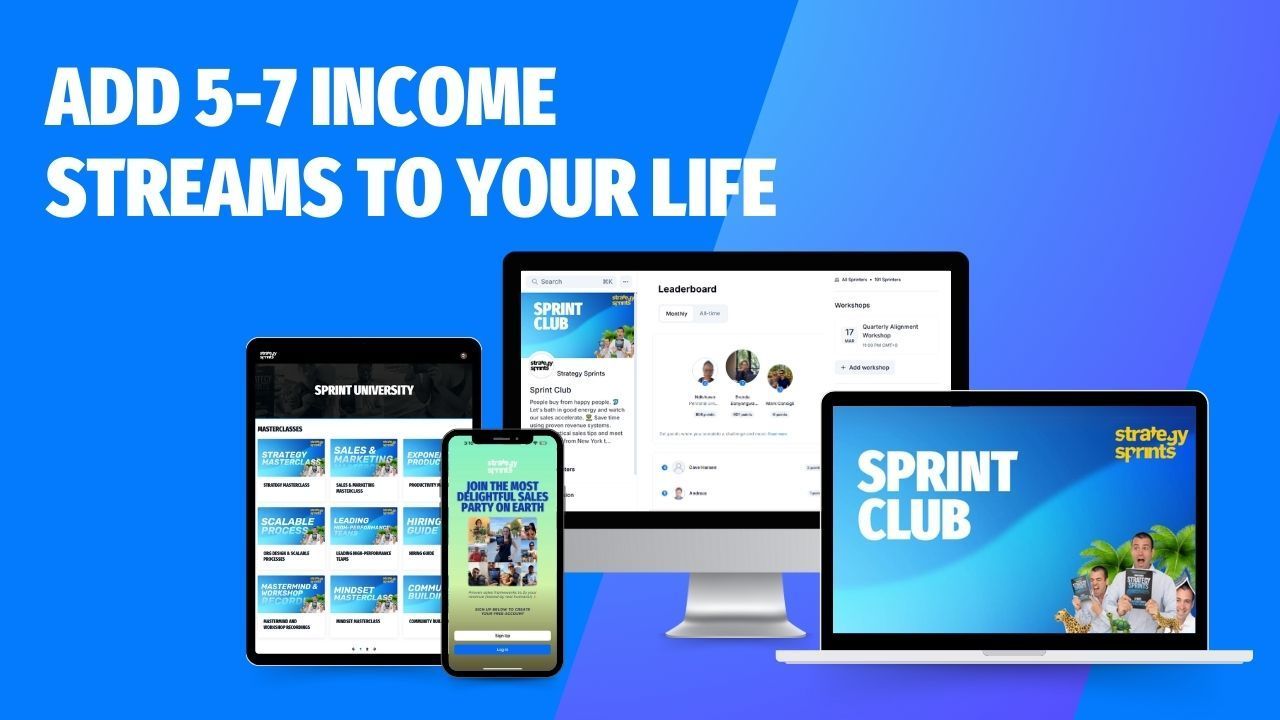
Want the tools, AI skills and a community of founders doing this every week? Try the Sprint Club free for 7 days: https://www.strategysprints.com
Ready to accelerate now? Book a Discovery Call: https://calendly.com/strategysprint/discovery-call
Happy hunting.
Simon & The Sprinters 🐬⚡️🐆
Lead your next deal, first call to signature. 🌴
The 36 Sales Gaps Checklist: 36 places a deal dies, and the fix for each. Free, one page.
Free. You get the checklist, then more sales tools like it by email from Strategy Sprints. Leave in one click, any time.