How I Replaced My SDR With Claude Code (+$81K)
Can Claude Code replace an SDR?
Yes, if you build a chain instead of one prompt. AI prospecting turns into slop when a single agent does everything. What works is a 5-step chain: research agent, research advisor (7 gates), drafting agent, two copy-editing passes, and a loop that kills any message under a 2% reply rate and scales anything above 4%. Add a heartbeat on every agent so a silent failure gets caught within 6 hours.
Updated October 2026
How I Replaced My SDR With Claude Code (and added $81K this month)
I replaced my sales team with Claude Code.
$81,000 in additional sales this month. An SDR costs you $5K to $8K per month. Claude Code costs $200 per month. The numbers are wild.. but the numbers only work if you build the right chain.
Most teams that try AI prospecting get slop. Generic emails. Fabricated calendar links. Forgotten follow-ups. They blame the model. The model is fine. It is a chain problem.
Here is what we run.
The stack
Three humans. Five advisors. 122 agents.
Each human has a specific role.. expected outcomes, responsibilities, and clear lines of what is NOT their responsibility. Each advisor has the same.. distribution, sales, strategy (also chairman of the board), strategic alliances, and tech ops. The five advisors think, strategize, and discuss with the CEO.. then they delegate to the 122 agents who do the actual work. Every agent is assigned to exactly one advisor.
That accountability chain is non-negotiable. Without it, agents break silently and nobody notices.
Why generic AI prospecting fails
If you are running a 5-10 person B2B team and you tried AI prospecting once.. you probably got terrible results. The output looks like a template. It forgets things. It makes up calendar links. We had fabricated calendar URLs in our first round. Real problem.
But it is NOT an AI problem. It is a chain problem.
A chain is.. agent does the work, sends to advisor, advisor criticizes and says improve this, agent reworks, goes back to advisor. Four steps minimum. Most setups I see in Silicon Valley do not have the full four steps. When you have five.. the slop disappears.
The 5-step chain that fixed it
Stage 1. The Research Agent. For every single prospect, the agent does a 6x research pull. LinkedIn, podcast appearances, recent funding (Series A, Series B), a primary source quote, what their engineering team is shipping right now, where they might have blockages, and one specific timing trigger.. why now. That output goes into a notebook.
Stage 2. The Research Advisor. Separate entity. The advisor scores the notebook against seven gates we set. Did we cite a real source? Is the trigger from the last 90 days, or 150 days old (dead)? Is the name spelled letter for letter correctly? Pass or fail. Max two tries. Three failures and the prospect kicks back to start.
Stage 3. The Drafting Agent. Now and only now is the agent allowed to draft an email in Gmail. One soft call to action. All seven gates already passed.
Stage 4. Copy editing. Two skills run on every draft. David Ogilvy rewrites for clarity and benefit. Then the Seven Critics.. seven grumpy readers, each grumpy for a different reason (one has three kids and no time, one is at the grocery store on their phone). The two lenses make the email sound human. Nothing hits Gmail unless every gate passes.
Stage 5. The self-improving loop. A dedicated agent measures conversions and improves the process. Auto-kill below 2% reply rate. Auto-scale above 4%. The system runs A/B tests against a goal (15 booked meetings in April) and optimizes itself.
Volume comes after fit
While the curated agent does the deep research, Hunter and Instantly handle the volume side. But only after the manual loop has proven what works. You validate manually.. then you scale to 100 sends per day.. then auto-kill or auto-scale based on reply rate. Never scale before you have product-market fit on the message.
The real risk is silent failure
Here is what nobody talks about. The single biggest risk with AI in production is NOT bad output. It is silent failure. The agent stops running. You do not notice. The pipeline empties. By the time you check, you have lost 11 days.
Every agent posts a heartbeat to Discord on every run. If an agent stops heart-beating, a watchdog catches it inside 6 hours and self-heals. Self-improving, self-correcting, self-healing.
Cloud triggers, not local cron jobs. If it is a local cron job, you close your MacBook and nothing runs. So we use cloud triggers. The whole stack runs when I am on stage. It runs overnight. It runs on weekends when I am out with my kids on the bikes.
What this means for you
If your AI cold email is slop, the model is not the problem. Build the chain. Five steps. Real research. Real advisor. Real copy gates. Real heartbeats. Real auto-kill rules.
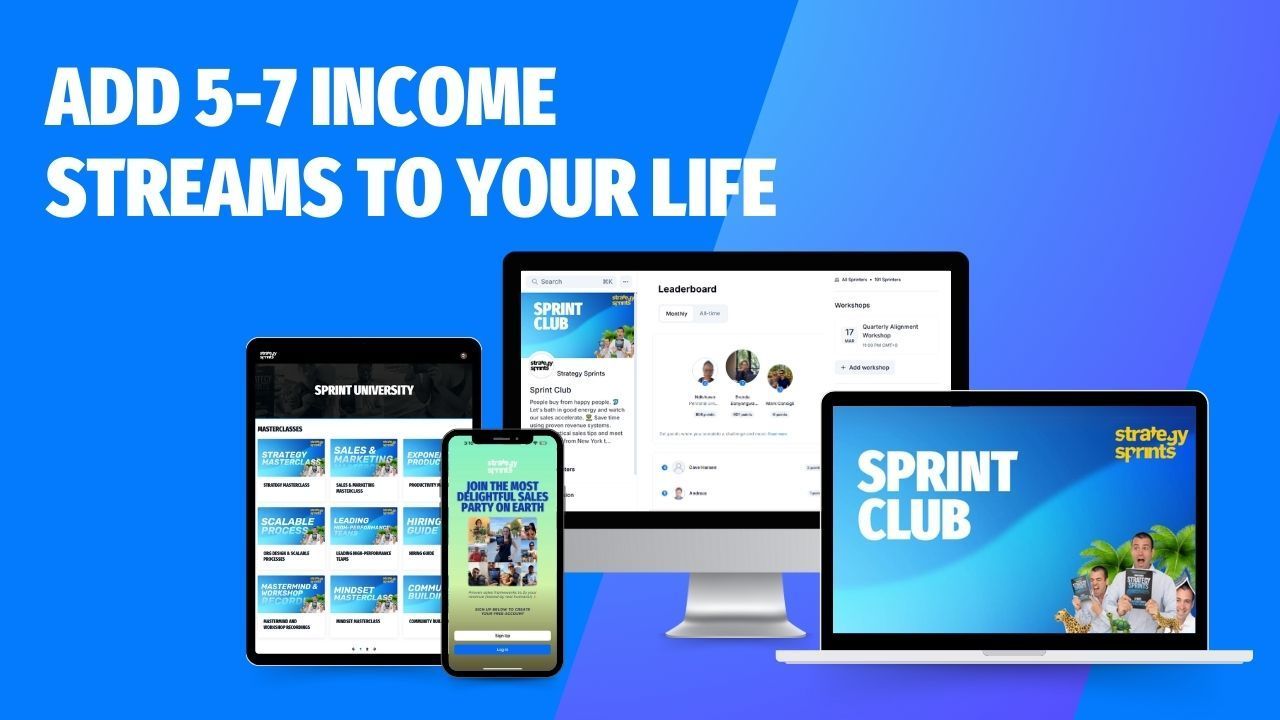
If you want my exact prompts, the Sprint Dashboard, and the agent files we use.. they are inside the Sprint Club. Seven days free trial.
Watch the full episode here: https://youtu.be/4lAlxA_xfiM
keep rolling, Simon & The Sprinters
Lead your next deal, first call to signature. 🌴
The 36 Sales Gaps Checklist: 36 places a deal dies, and the fix for each. Free, one page.
Free. You get the checklist, then more sales tools like it by email from Strategy Sprints. Leave in one click, any time.