Shorten the B2B Sales Cycle: Win the First 10 Seconds
The call went well. They nodded, they asked smart questions, they said they'd loop in their partner. That was three weeks ago.
Now there are four people on the thread, and the deal goes a little more stale with every one of them.
Buyers right now think longer before they spend. They bring more people into the decision. Every extra voice adds a week. So the question founders ask us most is this one: "Simon, how can we shorten the sales time?"
I talked this through with Al McBride on Dealing with Goliath (February 2025). Listen to the full conversation: Dealing with Goliath with Simon Severino
A long sales cycle is a trust problem
When you sell something above $10,000 over a Zoom call, the buyer is sending real money to someone they met online. That feels risky. So they slow down, ask a colleague, ask for one more call. And you feel the deal cool, one polite email at a time.
You can't rush that by pushing. Pushing adds risk. The way to shorten the cycle is to remove risk before they ask. There are five places to do it, in the order your buyer meets you.
1. Build a culture of opportunity creation
The first symptom I see: no culture of opportunity creation in the team. Nobody creates a small reason for a conversation every day.
It can be simple:
- Call a past, current or potential client. Hello, how are you, what do you need?
- Share what you're solving today on LinkedIn. Ask who has an idea.
- Record a short video. Nine minutes, here is how you do this.
Every day, those three things. "And if you have everybody in the team doing this over a period of time, let's say three months, now you have a full pipeline."
🐬 A full pipeline changes the sales call. You stop needing this one deal, and the buyer feels the difference. You walk in as the expert they want, not the vendor chasing a yes.
2. Win the first 10 seconds
Most marketing makes the same mistake: "they have the same messaging independently of the buyer's journey. And that's the first mistake."
A stranger needs attention content. Contrast. Say you're a financial advisor: one image of the person who saves 15% every month, right next to the one who doesn't. Someone who already knows you needs interest content, then engagement content, then let's-work-together content. One message for all of them reaches none of them.
Then open your website on your phone and look at the first 10 seconds. "Are you talking about them or are you talking about you?" Chew on that one for a minute.
If it says we, we, we, rewrite it into you. You, I see you. I know this is hard. Here is how three people like you solved it. Want to know how? Let's talk.
The client is the hero. You're the guide. Your buyer is one click away from three other options, a dog that wants a walk and friends who want to play tennis. If the first 10 seconds aren't about them, they never scroll.
3. Sell your strategic value, not your program
Here's a ten-minute exercise for your messaging. We call it the Strategic Value tool. Four questions:
- Who are you here to serve?
- What's coming for them in the next 12, 18, 24 months?
- What are you good at, and what do you stand for?
- How will you help them be ready for what's coming?
The answer to number four is your strategic value. "This is what you actually sell. It's not your program. It's not your product."
Put it front and center on the website and in your talking points on the call. Then pricing and features become secondary. The buyer is thinking: do you see where I am, where I need to go, what's coming for me? If the answer is yes, there's not much left to delay.
🐯 Strategic value lowers the risk before the price ever comes up.
4. Price waits for step six
On almost every call, the buyer asks early: Simon, what's the price? You can hear it coming. And I might be at step two.
In the 8 Steps of the Repeatable Sale, Investment is step six. It comes after Frustration, Importance and Cost of Inaction, because price only makes sense next to the problem you've discussed. Say it at step two and you hand over control of the call. And you lose the deal. I've watched thousands of sales recordings and given feedback on them. It's always the same pattern: "you have to cover the right things in the right order."
I keep the 8 Steps in front of me on every call, and an AI ticks off each step live, the moment I've covered it. It tells me where I am in the conversation.
That's also what makes sales repeatable, so you stop being the only one who can close. A freelancer runs the same eight steps. Then a full-time hire. Then a team of five, coaching each other in one common language. The sales cycle shortens because every call moves in the same order, whoever leads it.
5. Let trust arrive before the next call
Two more things shorten the next cycle before it starts.
First, obsess about delivery. Build wow moments into the work. When a client says something amazing about their progress, ask if they know someone who needs this. "They will refer because they want to help other people." A referred buyer arrives with trust already in place.
Second, a buyer can need up to 15 positive experiences with you before they send $20,000 or $50,000. Emails, posts, videos, a call. Plan those touches on purpose so they happen in weeks, not months.
🌴 And feedback, including the uncomfortable kind, is how you find the wow moments. It's the breakfast of champions.
Start this week
- Phone test. Open your website on your phone. Count how many times the first screen says "we" versus "you."
- Ten minutes. Answer the four strategic value questions. Rewrite your first screen with answer number four.
- Three a day. Every person on the team makes one call, shares one post and records one short video, every day.
- Hold the price. On your next call, when the price question comes early, note it, and come back to it at step six.
🐬 Start with step 1. It takes two minutes, and it shows you exactly what your buyer sees first.
Picture your next big call. The buyer arrives already knowing you see their world, because your website told them in 10 seconds. You lead the conversation in order. They name what doing nothing costs, you talk investment at step six, and the starting date lands on the same call. No partner loop, no three-week silence. That's Sprintlife: control in sales, and the time freedom to live the life you built the company for.
Listen to the full conversation with Al McBride: Dealing with Goliath with Simon Severino
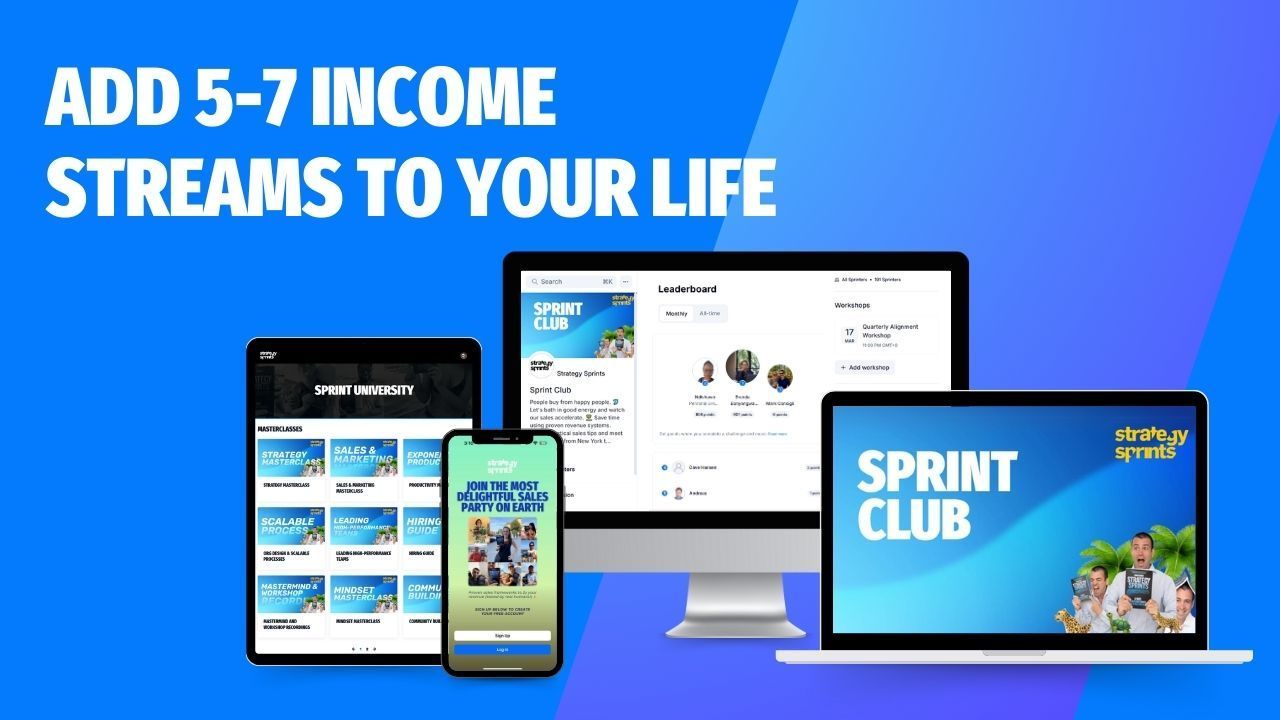
Grab the free tools and join the Sprint Club: https://www.strategysprints.com
Ready to accelerate now? Book a Discovery Call: https://calendly.com/strategysprint/discovery-call
Happy hunting.
Simon & The Sprinters 🐬⚡️🐆
Lead your next deal, first call to signature. 🌴
The 36 Sales Gaps Checklist: 36 places a deal dies, and the fix for each. Free, one page.
Free. You get the checklist, then more sales tools like it by email from Strategy Sprints. Leave in one click, any time.