What Are the Best Sales Training Programs for Small B2B Companies?
By Simon Severino, founder of Strategy Sprints, where 2,400+ B2B founders have gone through our programs. Updated October 2026.
The best sales training program for a small B2B company teaches one clear sales sequence, practices it on your team's real calls, and keeps going every week after the workshop ends. A famous name matters less than that. For a founder with a few new salespeople, training that stops on Friday is usually forgotten by the next big deal. 🐬
Here's what changes when you pick right. Your new hires run the same call you run. Deals stop dying after the proposal, and they close at the price you quoted. And you stop being the person every deal waits for, so a week off doesn't stall the pipeline.
What are the best sales training programs for small B2B companies?
The honest answer is a short list of types, not one winner. Each fits a different moment.
- Free online courses. Good for the basics, like HubSpot Academy's sales courses. Cheap, fast, and generic. Nobody listens to your calls.
- Methodology programs. Sandler, SPIN Selling, Challenger and similar systems. Proven frameworks, often built with large sales teams in mind.
- Tactical courses on one skill. Cold outreach, LinkedIn, negotiation. Useful when one stage of your funnel is the leak.
- Coaching programs that train on real calls. A coach or a small group works on your actual conversations, week after week, until the new habit holds.
Small teams usually need number 4 as the backbone, with 1 to 3 as add-ons. (Yes, number 4 is what we do, so hold us to the five questions further down too.) Here's why.
Why does sales training fail in small B2B companies?
Picture the usual story. The team goes to a two-day workshop. Everyone takes notes, nods, feels the energy. Monday, the first real buyer asks "Can you just send me a proposal?" and the old reflex wins. By Wednesday the notes smell stale, and the notebook stays in the bag. 🐯
The training wasn't wrong. The format was. Three things go missing:
- No reinforcement. One event, then nothing. A skill you practice once doesn't survive a hard week. A skill you practice every week starts to feel solid in your hands.
- No real calls. Role play with a colleague is polite. A real buyer isn't.
- No founder in the loop. In a small company, the founder is the sales culture. If you skip the training and your new hires take it, they learn one process and watch you run another.
What should a sales training program teach first?
The order of the conversation. Small teams rarely lose deals because they lack tricks. They lose because they do the right things in the wrong order: the price shows up before the buyer has said what the problem costs, and the proposal goes out before anyone agreed on a starting date.
The order is also what puts you in control. Whoever asks the next question leads the call, so nobody has to push, chase or beg. We train the 8 Steps of the Repeatable Sale, always in this order:
- Visualize: picture what they say, mirror, pace, then lead.
- Frustration: "What have you already tried?"
- Importance: "How big is this next to everything else going on?"
- Cost of Inaction: "What happens if you do nothing?"
- Deliverables: success, in the buyer's words.
- Investment: time, people, then money.
- Starting Date: a real date, not "soon".
- Statement of Work: written in their words, ready to sign.
Whatever program you pick, ask to see its sequence. If it's a bag of techniques with no order, your new hires will improvise, and improvising is how deals drift. More on the order in how to shorten a B2B sales cycle.
How do I choose a sales training program for my team?
Chew on these five questions before you sign anything:
- "Is it built for a team our size?" A program designed for big sales floors assumes managers, enablement staff and time you don't have.
- "Do you train on our recorded calls?" If the answer is only role play, the skill stays in the classroom.
- "What happens in week 6?" You want weekly practice, not a single event.
- "Will the founder and the new hires learn the same process?" One language in the company, or none.
- "What do we measure every Friday?" Conversations started, calls booked, deals with a starting date. Numbers your team controls.
A program that answers all five clearly is worth more than a famous name that answers two.
How do I train a new salesperson when I'm still the best closer?
In a small company, this is often the real question. You're hiring salespeople, and the worry is simple: what if the new hire sounds nothing like you?
Remember how you closed your first deals? Curious, calm, asking more than telling. That's what you want to hand over. But instincts don't transfer. A process does:
- Record your best calls. Mark where you asked about the cost of doing nothing, and where you asked for a starting date.
- Let the new hire run the 8 Steps on easy deals first, with you listening, not talking.
- Review one call together every week. Same steps, same order, same words.
- Score it every Friday. What went well, what slipped, what changes next week.
You'll hear the moment it clicks. The new hire asks "What happens if you do nothing?" and then stays quiet. The buyer answers. Nobody filled the silence. That's the call you used to run alone, now running without you. 🌴
Is a training program or ongoing coaching better for a small team?
Training gives you the map. Coaching makes you walk it.
For a small B2B company, a short training to learn the steps plus ongoing coaching on real calls usually beats either one alone. We run it as a weekly rhythm. Monday Strategy: the team picks one step to practice this week, say Step 7 Starting Date. Friday Learnings: count how many deals got a real date before the proposal went out, and listen to the one that didn't. Group formats like our 200K Club put you with other founders working on the same wall, and Custom Team Coaching works with your team 1:1.
If calls still feel like chasing, start here: how to stop sounding needy on sales calls and lead instead.
FAQ
What is the best sales training for a small B2B company? Training that teaches one clear sales sequence, practices it on your team's real calls, and continues weekly. Free courses help with basics, but real calls and reinforcement make it stick.
Is Sandler or SPIN good for small businesses? They're proven methodologies, often built with larger teams in mind. They can work for small teams when someone reinforces them weekly on real calls.
How long does sales training take to work? You'll notice change on calls within a few weeks of weekly practice. One-off workshops usually fade because nobody keeps practicing after the event.
Should the founder join sales training? Yes. In a small company the founder sets the sales culture. If the founder runs a different process than the new hires, the training won't hold.
What should sales training measure? Numbers your team controls each week: conversations started, calls booked, and deals with a committed starting date before the proposal goes out.
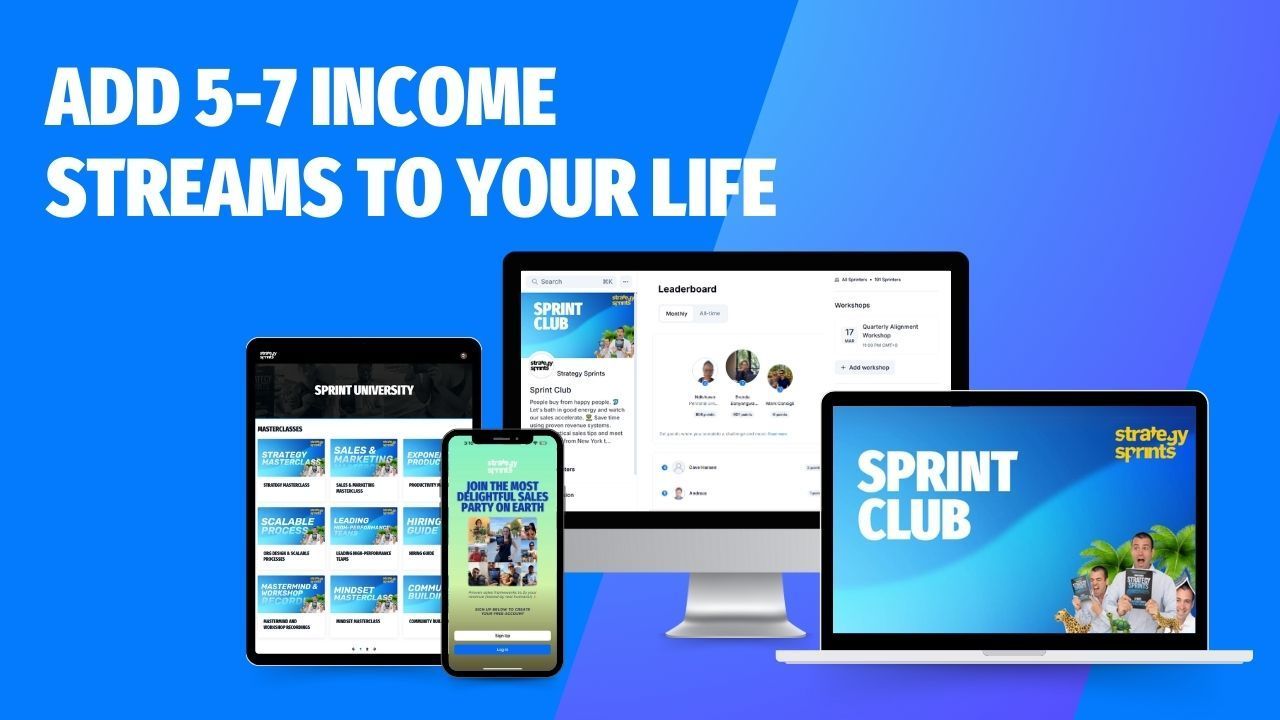
Want the tools, the AI skills and a community of founders who practice this every week? Try Sprint Club free for 7 days: https://www.strategysprints.com
Ready to accelerate now? Book a Discovery Call: https://calendly.com/strategysprint/discovery-call
Happy hunting.
Simon & The Sprinters 🐬⚡️🐆
Lead your next deal, first call to signature. 🌴
The 36 Sales Gaps Checklist: 36 places a deal dies, and the fix for each. Free, one page.
Free. You get the checklist, then more sales tools like it by email from Strategy Sprints. Leave in one click, any time.