How to Raise Prices in B2B: The 5% Rule and the 80% Ready Page
You know the moment. The buyer asks "what does it cost?" and your stomach tightens. You say the number a little softer than you meant to 🐯
And when it's time to raise prices, the questions pile up. How much? When? What if everyone leaves?
Chapter 7 of my book Strategy Sprints answers both. One rule for the price. One page for the calls.
The 5% rule
The pricing rule from the book, word for word:
"I teach Sprinters that with every new client, you raise the price by 5 per cent."
Not once a year. Not after a big strategy session. With every new client.
The question I am commonly asked next is in the book too: "Until when? Do we raise the price forever?"
"I say, as soon as you hit 40 per cent non-buyers."
That's the stop signal. The book makes it concrete: track your sales call conversions, and you'll know if "you talked to 10 people and 6 people buy." At that point you've found your sweet spot, and you stop raising.
Why this works
Picture the old way. You set a price once. Maybe you guessed. Maybe you copied a competitor. Then you protect that number for two years, and every discount nibbles at it.
The 5% rule flips it. Each new client is a small, calm test. You don't argue with yourself about "what we're worth". The market tells you, one client at a time.
It also sorts your offers for you. The book: "Some offers that underperformed might perform better at higher price points, and others you may decide are not worth it to continue." Either answer is a CEO decision, made with data instead of nerves.
And while 6 or more out of 10 still buy, you haven't hit the ceiling. Keep going. The number feels bigger in your chest than it does in the buyer's head 🐬
Part two: the 80% Ready Page
Price is only half of it. The other half is who you get on the phone.
The book puts it plainly:
"You should be talking with them when they're 80 per cent ready, not before."
Talk to people who are 10% ready and here's the cost, also from Chapter 7: "you can easily lose six or seven hours on one client who decides to wait and doesn't buy right then."
Six or seven hours. For one maybe. Feel that in your week.
So the book swaps one habit. When someone emails or DMs to ask for a call:
"your next step will not be to send them a calendar link. You will send them to your 80% Ready Page to make them a hotter lead."
What goes on that page? Three things:
- Social proof. Your happiest clients, in their own words, with their permission. A buyer should see someone like them on the page.
- Objection handling. The FAQ. Every question that would otherwise eat 20 minutes of your call ("which project management system do you use?") gets answered here, before the call.
- Trust building. What shows you're real: a book, a talk, logos, endorsements.
The call to action on that page is an application for a call, not a free calendar.
What changes when you do both
The book is honest about what happens next:
"You'll probably find that fewer sales calls are booked, and more sales calls are converting into sales."
Fewer calls. Better calls. A buyer who arrives having read your proof and your FAQ is already leaning in. You don't pitch. You ask, and you listen.
That's where the 5% rule becomes easy. A buyer who is 80% ready hears your price next to the problem they just told you about. Not next to a competitor's sheet 🌴
Run this with your team this week
Block 90 minutes on Friday. Sales, marketing and the founder in one room. Fresh coffee, laptops open, last month's numbers on the screen.
- Count your last 10 sales calls. How many bought? If it's 6 or more, you have room on price.
- Agree on the next client's price. Today's price plus 5%. Write it down. Say it out loud together, so it stops sounding strange.
- Collect your FAQ. Each person writes the 5 questions buyers ask most on calls. Merge the list. Those are your objection-handling block.
- Pick three proof pieces. Two client quotes you already have permission to use (or ask for them this week), plus one trust signal.
- Change one link. Wherever a calendar link goes out by reflex today (email signature, DM template, website button), point it to the 80% Ready Page instead. Even a simple version 1 beats none.
Next Friday, look at two numbers: calls booked and calls closed. Taste the difference. Fewer, and sweeter 🐯
Where this comes from
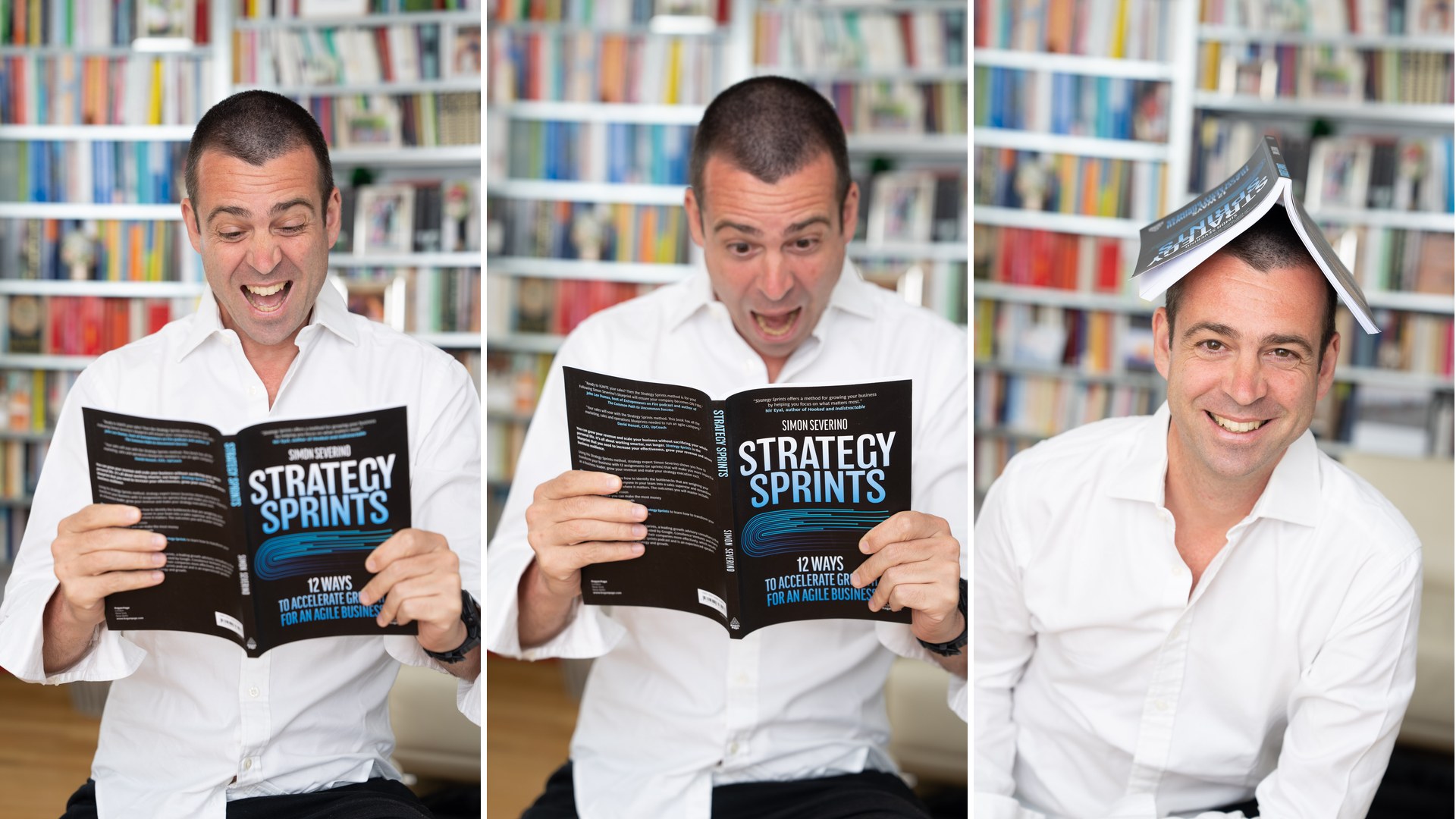
This is Chapter 7, "Value Ladder", of my book Strategy Sprints: 12 Ways to Accelerate Growth for an Agile Business (Kogan Page). The chapter also covers how to pick your one Main Product when you have 15 services, and how to design the small paid taste that sells it. Teams read it together, one chapter a week.
Get the book: https://www.amazon.com/s?k=Strategy+Sprints+Simon+Severino&i=stripbooks
Do it together
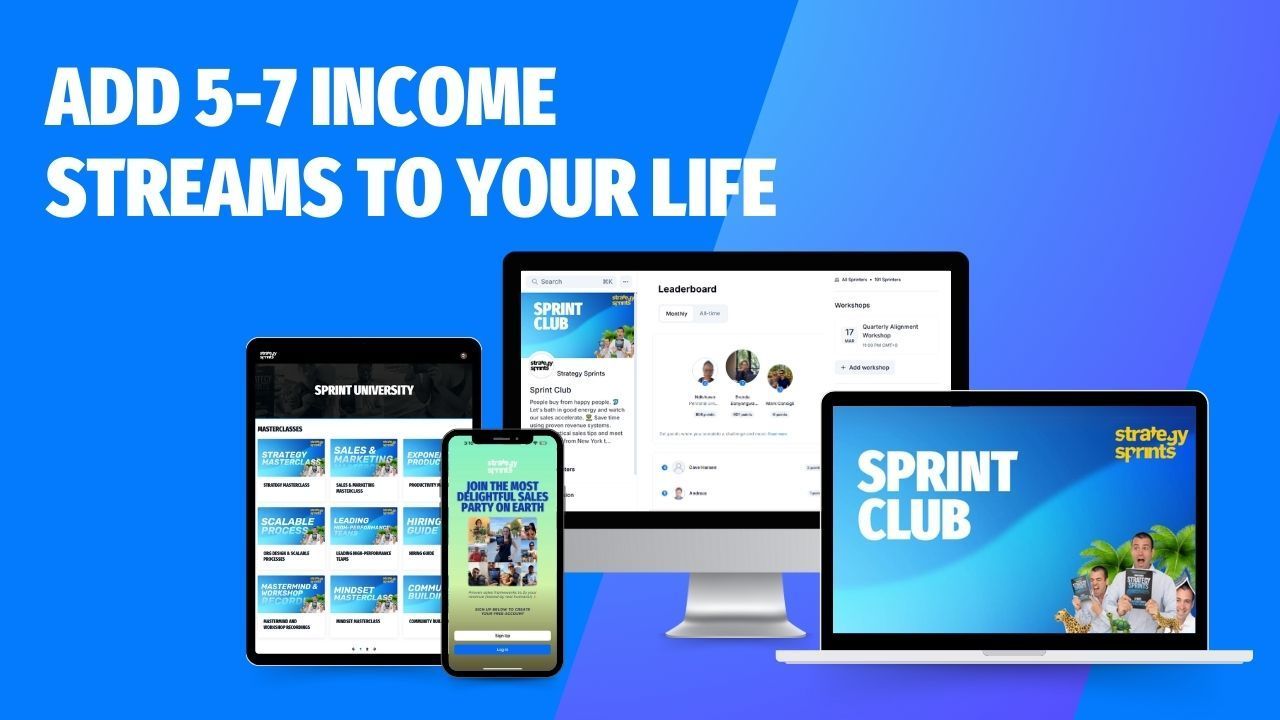
Raising prices alone feels risky. With people who've done it, it feels normal. Sprint Club is where founders do this work together, with the tools and AI skills we use ourselves. 7 days free: https://www.strategysprints.com
Ready to accelerate now? Book a Discovery Call: https://calendly.com/strategysprint/discovery-call
Happy hunting.
Simon & The Sprinters 🐬⚡️🐆
Lead your next deal, first call to signature. 🌴
The 36 Sales Gaps Checklist: 36 places a deal dies, and the fix for each. Free, one page.
Free. You get the checklist, then more sales tools like it by email from Strategy Sprints. Leave in one click, any time.