B2B Buyer Trust: Win Deals When AI Makes Offers Look Alike
Your prospect has three tabs open. Yours, and two others that look almost exactly like yours.
Same promise. Same clean website. Same "book a call" button. One of them was built last week, with an AI tool, by someone who has never delivered the thing they sell.
From the buyer's chair, you all look the same. So the buyer does the only safe thing. Waits. You hear "let me think about it." One more meeting. Then the thread goes stale.
That's not a pitch problem. It's a risk problem.
Take the risk out, and the chasing stops. Fewer meetings per deal. Bigger deals, at your price, because the buyer walks toward you instead of away.
I talked this through with Zorina Dimitrova on Grownlearn (April 2025). Listen to the full conversation: Sales Evolution: Trust, Communities and AI Tools
Anyone can build your offer now
On the show I told a story. Just by talking to Claude, I built a live money-management dashboard in 10 minutes. I don't code. My team knows I'm the least technical person on it. Learning to code and building it myself would have taken six months.
Twenty-two years ago I walked into rooms as the strategy guy. Suit and tie, big cars. Then times changed. Nobody wakes up in the morning wanting a strategy guy. They want someone who solves the problem.
The speed is great news. Now flip it. If I can build that in 10 minutes, everybody with Wi-Fi can.
"You will be in a world, over the next 12 months, 18 months, 24 months, where everything that you offer, basically the internet will offer."
I said that in April 2025. Look at your inbox today.
So the buyer's question changes. Not "who can do this?" Everyone can. The question becomes: "how do I know who's legit, how do I know who to trust?"
Selling is making it easy to buy
My definition, same as on the show: "selling is the art of making it easy to buy."
Easy to buy means safe to buy. "And making it easy to buy is de-risking."
The old reflex when a deal stalls is the opposite. More features. More slides. A longer proposal. Every addition is one more thing the buyer has to believe. The risk goes up, and the deal slows down.
🐬 Control of the sales conversation starts before the conversation. When the buyer already feels safe, you don't push. You lead.
On the show I said there are 28 things you can do to reduce risk for the buyer. Three of them do most of the work. I call them the three risk removers: a taste, proof in public, and access.
1. Give them a taste
Think of the new cheese at the supermarket. "They give you a little part of that actual product." You taste it, and you know.
Knowledge businesses forget this. "Like if you go to McKinsey, you can't taste anything." So the buyer has to carry the whole bet on a feeling. That weight is what slows the deal.
My book is a taster. A sprint is $27,000. That's a lot of money to risk on someone you've never worked with. A book is about 20 bucks. "If it's a terrible book, I know my decision." If it's a good one, the reader gives me one more chance.
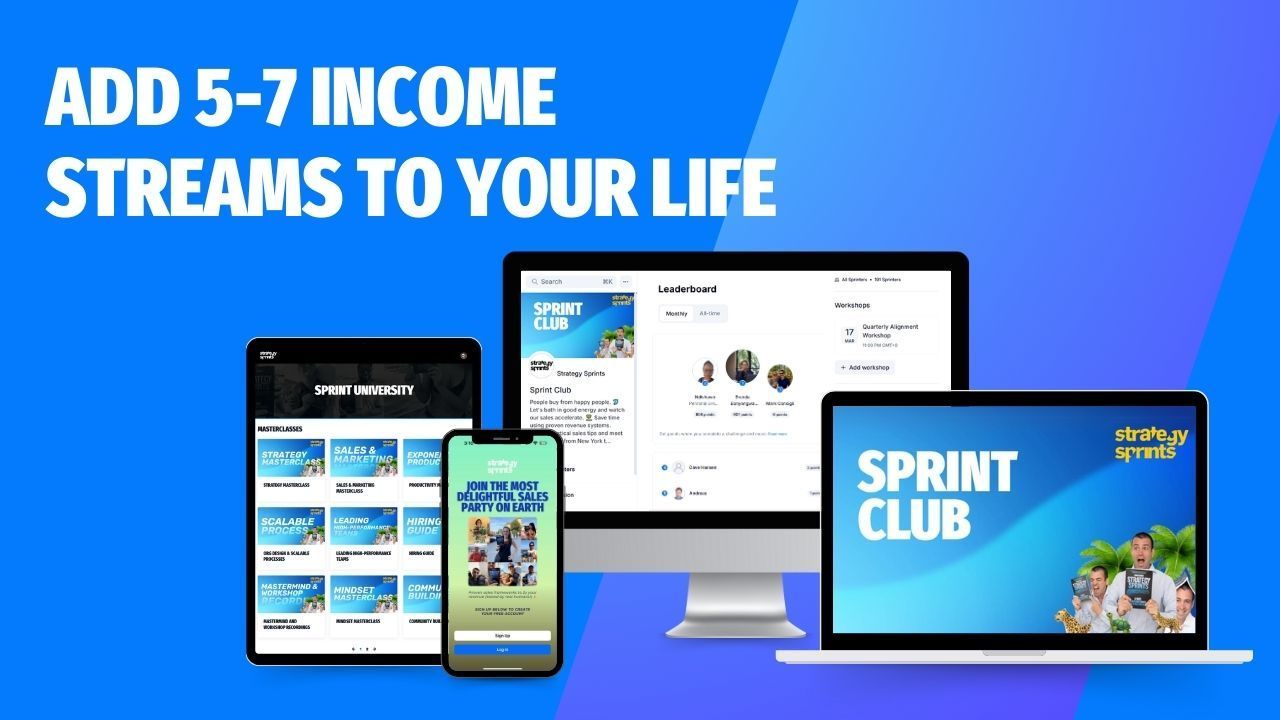
Same with our Sprint Club: seven days free. It took me about ten years of thinking to build that cheese-tasting moment.
What's your taster? A diagnostic. A teardown of one of their deals. A tool they can use on their own. Small enough that saying yes costs nothing, real enough that it shows how you work.
🐯 A taster also hands you control. The buyer who tasted and comes back isn't a lead you chase. They picked you.
2. Work in public
Here's the picture I used. You have software, I have software. You have a community, I don't. There are 20 people on YouTube talking about yours. "Who do you trust more?"
Or picture searching for a tax tool. One has zero people making videos about it. The other has 15. Gut feeling: which one feels safer? "If it works for them, it might work for me."
You don't need a big audience for this. "You do what you do, and what you're good at, but you do it in public."
That sounds like: "Hey, today I'm coaching this person, this is what happened. This is what I learned. This was my mistake."
The mistake part matters most. Anyone can publish polish. A shared mistake shows a real person doing real work.
Here's how I pick who to trust. I follow them. I read what they write. I ask other people about them. I watch five, ten, maybe fifteen of their videos. Then I decide.
Your buyer runs the same research on you, before your first call. Give them something to find.
3. Show you'll still be there when it goes wrong
Under all the research sits one question: "How do we find out who actually cares?"
On the show I put it simply. If it doesn't work, does the seller give you one more month, or your money back? Or do they take the money and say bye-bye?
Access answers that. If something breaks, you can ask somebody, instead of having nobody to ask. "You have access. You have a risk reversal."
And caring sounds like honesty. People who care give you the actual advice. Sometimes it's not what you want to hear.
🌴 "AI is just a tool." It helps you think faster. It doesn't stay in the room after the invoice. You do.
Your de-risking plan for this week
- Name your taster. One small, real piece of your work a buyer can say yes to in a minute.
- Find the risk they fear most. On your next call, ask Step 2 of the 8 Steps of the Repeatable Sale, Frustration: what have you tried already? The answer tells you where they got burned. Write it down in their words.
- Answer one of them on page one. At the top of your next proposal, before the price, answer this: what happens if it doesn't work?
- Post one real story. What happened, what you learned, what your mistake was.
- Put a name on access. One real person, one way to reach them, written into the offer.
- Score it every Friday. Did a buyer take the taster? Did anyone mention your post on a call? Watch the number climb week after week.
That's what all of this is for. One more story from that conversation. Chanel ran her business with her husband in Switzerland. Two people, carrying everything, working even when they weren't working. Her dream: a business that runs smoother and depends less on her. Then move somewhere sunny. After 90 days, the business ran better, and she moved to Barcelona. The sun, the beach, a business that works.
That's Sprintlife. Buyers who trust you before the first call. Deals that close without the chase. And the time to live the life you built the company for.
Listen to the full conversation with Zorina Dimitrova: Grownlearn with Simon Severino
Grab the free tools and join the Sprint Club: https://www.strategysprints.com
Ready to accelerate now? Book a Discovery Call: https://calendly.com/strategysprint/discovery-call
Happy hunting.
Simon & The Sprinters 🐬⚡️🐆
Lead your next deal, first call to signature. 🌴
The 36 Sales Gaps Checklist: 36 places a deal dies, and the fix for each. Free, one page.
Free. You get the checklist, then more sales tools like it by email from Strategy Sprints. Leave in one click, any time.