Close Bigger B2B Deals: Build a Pipeline That Lets You Wait
The proposal went out on Tuesday. It's Friday. Nothing.
You check your inbox between meetings. You write a "just following up" email, delete it, write it again. You start to wonder if the price was too high. Maybe you offer a small discount. Maybe you add a bonus month.
Richard Russell wrote Dow Theory Letters for almost 60 years. He boiled wealth down to one idea: the difference between a rich person and a poor person is that the rich person can afford to wait.
Now hold that idea up against your pipeline 🐬
What the buyer hears
The follow-up, the discount, the bonus month.. none of it is about the buyer. It's about not being able to wait. And the moment you can't wait, you've handed control of the conversation to the other side of the table.
And the buyer feels it. A founder who needs this deal sounds different from a founder who doesn't. Shorter pauses. Faster concessions. A follow-up that arrives a day too early. Buyers smell that in seconds, the same way you smell it on a salesperson who calls you twice in one afternoon.
You've probably sat across from the opposite too. The founder who never seems to chase. Calm voice, long pauses, buyers leaning in.
Why most founders can't afford to wait
It's rarely about character. It's arithmetic.
If you have four live deals, every one of them is 25% of your quarter. Of course you chase. Of course you discount. One "no" hurts.
If you have forty, one quiet buyer is just Tuesday 🐯
So the ability to wait isn't a mindset you talk yourself into before a call. It's built in the weeks before the call. It's the size of the pipeline behind the person you're talking to.
And here's the trap the grind sets for founders: when you're busy closing, nobody is filling the pipeline. Marketing and prospecting run on your calendar. So the moment you get busy, the pipeline dries up, and three months later you're back to four deals and a racing pulse.
What "can't wait" costs you in the conversation
Pressure pushes even great founders into the right things in the wrong order:
- The proposal goes out too early. Before the buyer has said what doing nothing costs them, and before anyone agreed on a starting date. Then it sits there, and the chasing starts.
- The price lands before the value. The buyer never put a number on the problem, so the price looks big, and the deal shrinks.
- The silence gets filled. Silence is one of the strongest tools in a sales conversation. Three seconds of quiet on a call can feel like a minute. Under pressure, it's the first thing to go.
That's how deals take six meetings instead of two. That's how they die at 95%.
So put your own number on it. Think of the last deal you discounted to get it over the line. What did that discount cost you.. and how many more like it are in this year's plan?
How to become the founder who can wait
Russell's rich person didn't decide to be patient. They built the position that made patience cheap. You can do the same in sales.
1. Build a pipeline that doesn't depend on your calendar. Daily business development habits, set in your Monday Strategy and scored in your Friday Learnings. Prospecting and marketing that keep running while you're on calls. Every Friday the scorecard shows, in black and white, how many new conversations started. When they keep arriving, you stop needing any single one 🌴
2. Let the buyer do the waiting math, not you. In the 8 Steps of the Repeatable Sale, Step 4 is Cost of Inaction: "What happens if you do nothing?" You ask it, and then you stay quiet. The buyer says the number out loud. Now the cost of waiting sits on their side of the table, not yours.
3. Get a starting date before the Statement of Work. Step 7 is Starting Date. A specific date, not "soon". Only then Step 8, the Statement of Work, written in their words. A proposal that follows a committed date doesn't need chasing.
4. Know your walk-away before the call. Decide in advance what you won't do: the discount floor, the scope you won't add for free. When the line is clear before the call, you don't negotiate against yourself during it.
Picture Daniel
Made-up name, very common founder. Daniel runs a B2B consulting firm, around $4M a year, and just hired his first salesperson.
Version one: Daniel has five deals open. A buyer goes quiet, Daniel sends three follow-ups in a week, offers 15% off, and closes a smaller deal six weeks later. It tastes like a win and pays like a loss.
Version two: Daniel has spent a quarter building a pipeline that runs on habits, not on his calendar. Same buyer goes quiet. Daniel waits, because he can. On the next call he asks what happens if they do nothing for another six months. The buyer answers: a missed hiring plan and a target that slips again. They agree on a starting date. The proposal goes out in the buyer's words, at full price.
Same founder. Same skills. The only difference is that in version two, he could afford to wait 🐬
The same rule pays outside sales
I see it in my own investing. When I sell an option 45 days out, time works for me, as long as I'm not forced to close early. The investor who can wait collects. The one who can't, pays.
Sales works the same way. Control of the conversation goes to whoever needs the deal less. Build that, and closing stops feeling like chasing. It starts feeling like what it should be: two people deciding whether to build something together.
Your one move this week: count your live deals. If losing any single one would hurt, your next Monday Strategy starts with filling the pipeline, not with chasing the quiet buyer 🐯
That's the Sprintlife: control in sales, time freedom in your week, and a business that funds the life you actually want.
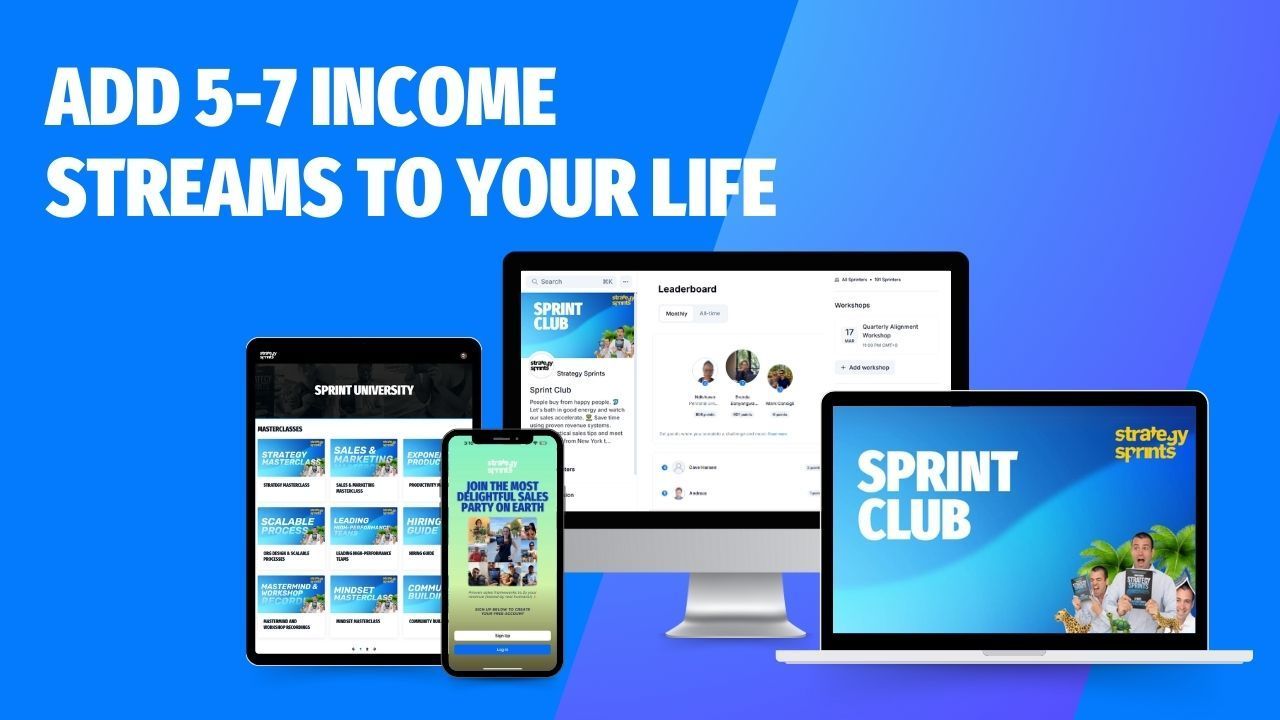
Want the tools, the AI skills and a community of founders building this every week? Join the Sprint Club, 7 days free: https://www.strategysprints.com
Ready to accelerate now? Book a Discovery Call: https://calendly.com/strategysprint/discovery-call
Happy hunting.
Simon & The Sprinters 🐬⚡️🐆
Lead your next deal, first call to signature. 🌴
The 36 Sales Gaps Checklist: 36 places a deal dies, and the fix for each. Free, one page.
Free. You get the checklist, then more sales tools like it by email from Strategy Sprints. Leave in one click, any time.