How Do I Double Revenue in 90 Days in a B2B Company?
By Simon Severino, founder of Strategy Sprints, where 2,400+ B2B founders have gone through our programs. Updated November 2026.
You double revenue in 90 days by closing more of the conversations you already have, not by chasing more leads. In a founder-led B2B company the fastest money sits in three places: proposals that went quiet, past clients who would buy again, and deals you are pricing too small. Fix the order of your sales call, then run one weekly rhythm to measure and adjust. 🐬
Picture Friday afternoon. Three proposals out, all quiet, and you refreshing the inbox. That's the old way. The new way: you lead the call, and the buyer names the price of doing nothing before you name yours. That's control, and control is what makes growth fast. 🐯
Is doubling revenue in 90 days realistic for a B2B company?
Yes, under three conditions:
- Your sales cycle is shorter than about 60 days. A deal you start today has to be able to close inside the window.
- You already have conversations in motion. Open proposals, warm past clients, a list of people who said "not now".
- You are still the main closer. That sounds like a problem. For 90 days it's an advantage: one person can change how every call runs by Monday.
If your cycle is six months, count signed contracts and booked revenue in the 90 days, not cash collected. Be honest about which number you are doubling. 🌴
Who this won't fit: companies selling to consumers, and year-long public tenders. There the window is simply too short.
It happens. Alchemy, a $3M-a-year B2B company we coached, grew revenue 130% in 90 days.
Where does the fastest new revenue hide?
Not in a new campaign. New leads take weeks to warm up. Look here first:
- Stalled proposals. In The JOLT Effect (Dixon & McKenna, 2022), 40 to 60% of qualified deals end in no decision. Not lost to a competitor. Lost to "let's wait". Every quiet proposal on your list is weeks of your own work, sitting still.
- Past clients. They already trust you. One call each, this week.
- Deal size. The same effort, a bigger scope, a price that sits next to the buyer's own number.
- Win rate. The calls you already take, closed more often.
Illustrative math, not a client: 10 proposals out at $30,000, you close 3. That's $90,000. Close 5 of the same 10 at $40,000 and it's $200,000. No extra lead. More than double. 🐬
What do I change on the sales call first?
The order. A deal that stalls after the proposal usually stalled earlier, on the call, when the right things happened in the wrong order. Run the 8 Steps of the Repeatable Sale on every call:
- Visualize: picture their world, mirror, pace, then lead.
- Frustration: "What have you already tried?"
- Importance: "Where does this sit next to everything else on your plate?"
- Cost of Inaction: "What happens if nothing changes for six months?" Then stay silent.
- Deliverables: "What do you want to see in the next 10 days?"
- Investment: time, people, money. In that order.
- Starting Date: "Which date are we committing to?"
- Statement of Work: written in their words, sent before the next meeting.
The two steps that move the most money: Step 4 and Step 7. Skip them and you send a proposal into silence. Ask them, and the moment the buyer says the cost out loud, you feel the pressure move off you and onto the decision. Here is how the cost of inaction question works in detail. 🐯
How do I bring stalled deals back to life?
Don't send "just checking in". That's chasing, and it goes stale fast. Send one line that reopens the decision, in the buyer's own words from your last call. An example:
"When we spoke, you said every month without a fix costs you a missed hire and a slower quarter. Is that still true, or has something changed?"
They either say "still true" (you book the start date) or "something changed" (you learn why, and you stop forecasting a dead deal). Both are a win. One message per stalled deal, this week. 🌴
How do I raise deal size without losing the deal?
Put Step 4 before Step 6. When the buyer says out loud what the problem costs them, your price lands next to their number, not next to a competitor's quote.
Then offer scope, not discounts. A discount leaves a bitter taste on both sides. "We can do the 30-day version, or the 90-day version that also trains your two new hires." The buyer picks. You stay in control.
What does the 90-day plan look like, week by week?
- Weeks 1-2: list every open proposal and past client. Call or message each one. Learn the 8 Steps and use them on every new call.
- Weeks 3-6: every new call runs Steps 1 to 8 in order. No proposal leaves without a cost of inaction and a starting date.
- Weeks 7-12: raise scope on new deals, ask every happy client for one introduction, repeat what won.
If you do one thing this week: send the reopening message to every stalled proposal. 🌴
The rhythm that holds it together: Monday Strategy (set the week: which deals, which calls, one priority) and Friday Learnings (score the week: what closed, what stalled, what to double down on). Fifteen minutes each. That loop is how you see in week 3, not week 12, what's working. And Friday turns into the part of the week you look forward to: the win, in black and white. 🐬
What if I'm hiring salespeople right now?
Then 90 days is your window. A new hire can't run a process that only lives in your head. Write the 8 Steps down while you use them, record your calls, and let the new hire shadow before they lead. That's also why new sales hires fail in small B2B companies: nobody gave them the order of steps. 🐯
FAQ
Can a B2B company really double revenue in 90 days? Yes, when the sales cycle is under about 60 days and conversations are already in motion. With a longer cycle, double the signed contracts first.
Do I need more leads to double revenue? Usually not first. Stalled proposals, past clients and bigger deals are faster than new leads, which take weeks to warm up.
What is the fastest single change? Ask the cost of inaction question (Step 4) and agree on a starting date (Step 7) before any proposal goes out.
How do I stop discounting while I grow? Let the buyer name what the problem costs before you name the price. Then offer a smaller scope instead of a lower price.
How do I keep track during the 90 days? Monday Strategy to set the week, Friday Learnings to score it. Count calls, proposals with a start date, and signed deals.
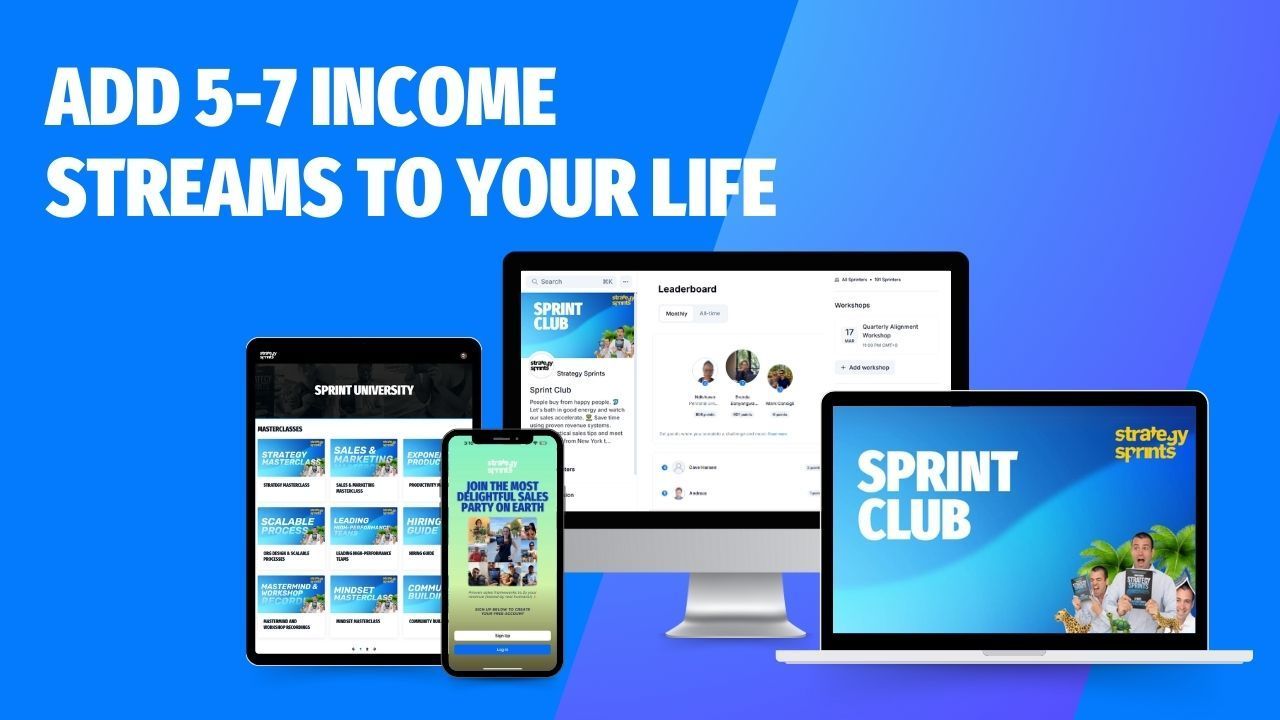
Want the tools, AI skills and a community of founders doing the same work? Join Sprint Club, 7 days free: https://www.strategysprints.com
Ready to accelerate now? Book a Discovery Call: https://calendly.com/strategysprint/discovery-call
Happy hunting.
Simon & The Sprinters 🐬⚡️🐆
Lead your next deal, first call to signature. 🌴
The 36 Sales Gaps Checklist: 36 places a deal dies, and the fix for each. Free, one page.
Free. You get the checklist, then more sales tools like it by email from Strategy Sprints. Leave in one click, any time.