Why Do New Sales Hires Fail in Small B2B Companies?
By Simon Severino, founder of Strategy Sprints, where 2,400+ B2B founders have gone through our programs. Updated October 2026.
New sales hires in small B2B companies usually fail because the company hires a person before it has something to hand that person. The sale lives in the founder's head, leads depend on the founder's calendar, and nobody scores the new hire's calls each week. Fix those three things and the same hire can win deals without you on the call. 🐬
So the hire is rarely the problem, and the fix sits with you. What you really hand over is control of the sales conversation: the order of the questions, who talks, when the price comes. Hand that over and you get your evenings back, your price holds, and you stop being the only closer.
Is it the salesperson, or the setup?
Usually the setup.
Picture an illustrative case. A founder (call him Daniel, made-up name, very common story) closes most deals himself. He hires an experienced account executive. Week one: laptop, CRM login, a slide deck, "shadow me for a bit". Week six: the hire has sent proposals, chased them, and heard silence. Month four: Daniel takes the deals back. Month six: the hire leaves. Half a year of salary gone, Daniel back to closing alone at night, the job post up again. It leaves a bitter taste, and he concludes he "hired wrong".
He didn't. He handed over a job with no process, no pipeline and no coach. A strong seller in that setup still fails. They just fail politely.
If you've lived a version of this, count it once: the salary, the months, the deals that came back to your desk. That is what doing nothing about the setup costs you on the next hire too.
What are the real reasons new sales hires fail?
Six reasons, and they stack:
- The sale only exists in your head. You know when to push, when to wait, when to name the price. That instinct took you years. Your hire gets a deck.
- You are still the only closer. Every big deal comes back to your desk "just this once". The hire learns that you are the process.
- The right things happen in the wrong order. Pitch, proposal, follow up, ghosted. The proposal goes out before the buyer has said what doing nothing costs or named a starting date. Nobody is in control of the conversation.
- There are no leads to call. Marketing and prospecting run on your calendar. When you get busy closing, the pipeline dries up, and the new hire sits with nobody to talk to.
- There is no weekly rhythm. No one sets the week, no one scores it. Mistakes repeat for months before anyone notices.
- There is no spotter. In the gym, a spotter stands behind you so you can push through the heavy rep. A new seller facing a tough buyer has nobody behind them, so they lose control of the conversation and get needy: they discount, chase and beg.
None of the six is about talent. All six are about the setup. 🐯
What should you fix before the new hire starts?
Three things, in this order.
1. Write the sale down as questions, not slides. We use the 8 Steps of the Repeatable Sale: 1 Visualize, 2 Frustration, 3 Importance, 4 Cost of Inaction, 5 Deliverables, 6 Investment, 7 Starting Date, 8 Statement of Work. Each step is one question the hire can read off a sticky note. The full version is here: a repeatable sales process a new hire can run.
2. Build a lead supply that doesn't need you. If your pipeline only fills when you post, call or network, your hire inherits an empty calendar. Set up prospecting that runs without your hours first. Here is how: more B2B leads when you have no time for marketing.
3. Decide what "good" looks like per call. Not "close deals in month one". Instead: did they get the buyer to name the cost of inaction (Step 4) before the price (Step 6)? Did the proposal go out only after a starting date (Step 7)? That is something a new hire can hit in week two.
How do you onboard a new salesperson so they actually perform?
Skip the long shadowing phase. Use this sequence instead:
- Day one: hand over the 8 questions. One page. No 50-page playbook.
- Week one: they listen to two of your calls. They score you against the 8 steps. Yes, you. It shows them what to listen for.
- Week two: they lead two calls, you stay quiet. No rescue. You take notes.
- Every call after: score it. Which step was skipped? Which came too early? An AI notetaker can flag it from the recording.
- Every Friday: review, don't rescue. Talk through what moved and what stalled.
The moment you're working toward: the first call where your new hire leads, the buyer says their own number out loud, and agrees to a start date. You weren't in the room. That's the hire who stays. 🌴
What weekly rhythm keeps a new hire on track?
Monday Strategy and Friday Learnings.
On Monday you set the week together: which deals, which step each one moves to, which calls the hire leads, how many new conversations they start. On Friday you score it in black and white: what worked gets done more, what failed gets dropped.
Without it, even a good process goes stale. With it, the week stays crisp. It takes about an hour a week. It replaces the Tuesday panic when a deal goes quiet, and within a few Fridays you see whether the hire is learning.
What do you say when the hire wants you to take over a deal?
Say this, word for word:
"I'm not joining that call. Walk me through where it stands. Which step are you on? What did the buyer say when you asked what happens if they do nothing?"
If they didn't ask, that's the coaching. Send them back with one question. If you jump in, you win one deal and lose the hire.
How do you know it's working?
Three tests:
- The scorecard test. Every Friday you can see, per deal, which step it's on.
- The proposal test. No proposal leaves without a named start date and the buyer's own cost of inaction in it.
- The week-off test. You take a week off (phone off, evenings with your family) and deals still move at your price. You become the founder other founders ask: how did you build that?
Your one move this week: before your next hire starts (or tomorrow, if they already have), put the 8 questions on one page and agree on the Friday scorecard together.
If you'd rather have it installed than build it alone, that's our 90-Day Sales Acceleration: the 8 steps, a lead engine that runs without your calendar, the weekly rhythm, and spotters on live calls until your new hire leads them.
FAQ
Why do experienced salespeople fail at small companies? They arrive used to a working machine: leads, process, managers. In a small company they find the founder's instinct instead. Hand them a written process and a lead supply, and their experience starts to count.
Should I hire a VP of Sales or a hands-on seller first? A hands-on seller who will run your process. A VP needs a machine to manage; if the sale still lives in your head, there's nothing to manage yet.
How long does it take a new B2B sales hire to ramp up? We don't measure it in months. We measure it in scored calls: when a hire runs all 8 steps in order on their own calls, they're ramped. The more calls you score each week, the sooner that happens.
How do I give a new sales hire enough leads? Build the lead supply before their start date, and make it run without your calendar. A hire with no one to call can't learn, no matter how good they are.
What is the biggest mistake founders make with a first sales hire? Rescuing deals. Each time you take over a call, the hire learns that you are the real process.
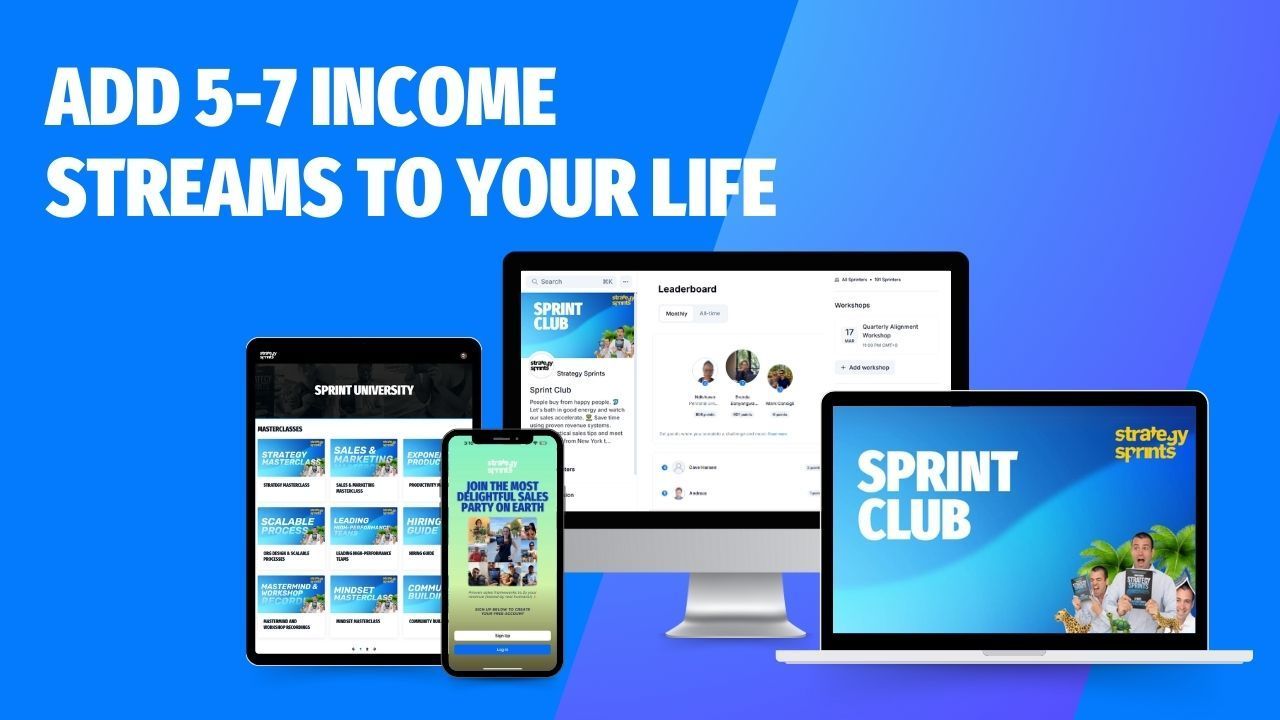
Want the tools and AI skills we use, with a community of founders doing the same work? Join Sprint Club, 7 days free: https://www.strategysprints.com
Ready to accelerate now? Book a Discovery Call: https://calendly.com/strategysprint/discovery-call
Happy hunting.
Simon & The Sprinters 🐬⚡️🐆
Lead your next deal, first call to signature. 🌴
The 36 Sales Gaps Checklist: 36 places a deal dies, and the fix for each. Free, one page.
Free. You get the checklist, then more sales tools like it by email from Strategy Sprints. Leave in one click, any time.