What Is Pricing Power and How Do I Get It? (B2B Founder Answer)
By Simon Severino, founder of Strategy Sprints, where 2,400+ B2B founders have gone through our programs. Updated October 2026.
Pricing power is your ability to name the price you want and win the deal without discounting. In B2B sales it isn't set on a pricing page. It's built in the call, when the buyer puts a number on what their problem costs before you say your price. Then your price sits next to their number, not next to zero. 🐬
You know the scene without it. A great call, a proposal out the door, then the reply: "Can you do better on price?" With pricing power, deals get bigger at the same effort and that email gets rare. You lead the call instead of defending a number. And you stop needing more and more deals to hit a target that already feels far away.
What is pricing power, in plain words?
Investors define it as raising prices without losing customers. True, and not very useful when you're a founder with a proposal due on Friday.
The version you can use on Monday: pricing power is who sets the frame for the price.
If the buyer compares your number to nothing (doing nothing feels free), every price looks big. If the buyer compares your number to what the problem costs them every quarter, your price looks small. Same offer. Same number. Different frame.
So pricing power isn't a trait some companies are born with. It's a result of what happens in the conversation, and in what order. 🐯
What are the signs you don't have pricing power yet?
None of these is a skill problem. They're what the old way of selling (pitch, proposal, wait) produces, every time.
- Same effort, smaller deals. You wanted a bigger engagement and landed a smaller one.
- Discounts show up near the end. The buyer liked everything, then asked for "a little flexibility".
- Your price gets a pause. You say the number and the call goes quiet in the wrong way.
- "Let me think about it." Then a long silence. The JOLT Effect research (Dixon & McKenna, 2022) found 40-60% of qualified deals end in no decision.
- You need more deals to hit the target. Because each one is smaller than it should be.
If two or more of these sound familiar, the problem is rarely the price itself. It's when the price shows up.
Why do you lose pricing power in the first place?
Price before value. That's the source.
The buyer never says what the problem costs. So when your number arrives, there's nothing to hold it up against. The buyer's brain does the only math it can: "That's a lot of money compared to keeping things as they are."
Then you defend the price. You explain, you justify, you send a case study. And the buyer feels you need the deal more than they do. That's where control of the conversation slips away, and the discount follows. A bitter end to a good call.
One founder said it plainly on a call with us: "I priced the first few too low." The fix isn't a braver number. It's a better order, and a clean break from defending your price.
How do I get pricing power in B2B?
Put the cost before the price. In the 8 Steps of the Repeatable Sale it looks like this:
- Visualize. Picture what the buyer says, mirror their words, match their pace, then lead.
- Frustration. "What's the frustration? What have you already tried?"
- Importance. "How important is this, in the context of everything else going on?"
- Cost of Inaction. "What happens if you do nothing?" Then silence.
- Deliverables. "What do you want to achieve in the next 10 days?"
- Investment. Time, people, then money. In that order.
- Starting Date. "To which starting date are we committing?"
- Statement of Work. In the buyer's own words, ready to sign.
The whole trick sits between Step 4 Cost of Inaction and Step 6 Investment. The buyer names the cost first. Your price arrives two steps later, next to their number. That's pricing power, built on purpose. And the buyer hears a founder who isn't chasing the deal. 🌴
For the deeper version of Step 4, read bigger deals at the price you want: let the buyer name the cost first.
How do I get prospects to quantify the cost of their problem?
You don't calculate it for them. You ask, and you let them do the math out loud. Say it slowly:
- "If this looks the same in three months, what does that cost you?"
- "How many deals is that? Roughly what size?"
- "And over a year?"
- "What does that mean for you personally?"
Write down their exact words and their number. If they say "I don't know", don't rescue them. Try: "Ballpark. Is it closer to ten thousand or a hundred thousand a quarter?" Then wait.
An illustrative example (made-up founder, very common situation): she says the empty pipeline costs her "two deals a quarter, about 60,000 each". That's 120,000 a quarter, almost half a million a year, in her own words. Now a 27,000 engagement isn't big. It's small next to her number.
How do I sell value instead of price?
Stop presenting value. Let the buyer say it.
Your ROI slide is your number, so the buyer looks for the hole in it. Their cost of inaction is their number, so they believe it. Selling value means the buyer has already told you what the result is worth before you show what it costs.
Three rules that keep it that way:
- No proposal before a cost. If the buyer hasn't said what doing nothing costs, it's too early to send anything.
- No price before the result is defined. Step 6 Investment comes after Step 5 Deliverables, and Step 7 Starting Date follows right away, so your price never floats alone.
- The Statement of Work uses their words. Their problem, their number, their deliverables. When they read it, they read their own story.
If discounting is already a habit, start with how to stop discounting in B2B sales.
How do you keep pricing power when you hire salespeople?
This is where it often breaks. You can hold a price because you know the value by heart. A new hire can't, so they give the discount you never would.
Make it a process, not a talent. In Monday Strategy, pick the deals that need a Step 4 conversation before anything else moves. In Friday Learnings, check one field per deal: "What did the buyer say doing nothing costs?" Empty field, no proposal.
At Strategy Sprints we practice this with founders and their new sales hires on live deals, with spotters who push you through your current sales wall. Before Strategy Sprints, I coached 2,000+ teams, including Google, BMW and Airbus. 🐯
Your one move this week: on your next call, ask "What does that cost you if nothing changes?" before you say any price. Then wait five full seconds.
FAQ
What is pricing power in simple terms? It's the ability to get the price you want without discounting or losing the deal. In B2B sales, it comes from the buyer comparing your price to their own cost of the problem.
How do I know if my company has pricing power? Look at your last five deals. If they closed at the size you wanted, without a late discount, you have it. If deals shrank or stalled after the price, you don't yet.
Can a small B2B company have pricing power? Yes. In B2B services and software it's built in each sales conversation, not by market share. The order of the call matters more than the size of the company.
What is the fastest way to raise prices without losing deals? Get the buyer to name what doing nothing costs before you name your price. Step 4 Cost of Inaction before Step 6 Investment.
Is pricing power the same as value-based pricing? They're related. Value-based pricing sets the number from the value. Pricing power is whether the buyer accepts that number, and that depends on whether they said the value first.
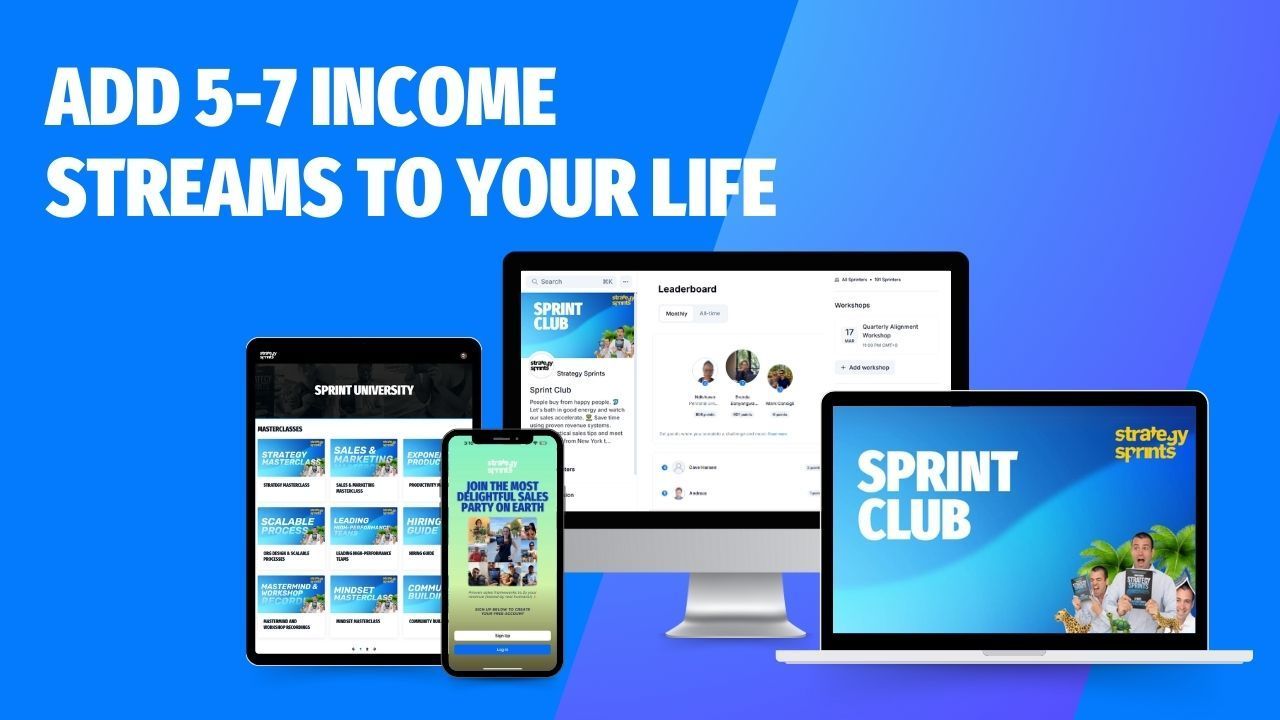
Want the 8 Steps tools, the AI skills we use, and founders practicing the same calls with you? Join Sprint Club, 7 days free: https://www.strategysprints.com
Ready to accelerate now? Book a Discovery Call: https://calendly.com/strategysprint/discovery-call
Happy hunting.
Simon & The Sprinters 🐬⚡️🐆
Lead your next deal, first call to signature. 🌴
The 36 Sales Gaps Checklist: 36 places a deal dies, and the fix for each. Free, one page.
Free. You get the checklist, then more sales tools like it by email from Strategy Sprints. Leave in one click, any time.