Control the Sales Conversation: Be the Orchestrator, Not the Supplicant
The proposal went out. The buyer loved it. Then.. nothing. Emails unanswered. Calls straight to voicemail. And you start drafting the polite "just checking in" that you already know won't work.
If that sounds familiar, the problem isn't your skill. Big deals simply ask for a different role than the one most of us were taught.
This article comes from the bonus chapter "Dealmaker" in Time Freedom: Applied Leverage For Your Business Breakthroughs, the book I wrote with Jay Abraham. Its subtitle is the whole lesson: "Being the Orchestrator, Not the Supplicant."
The stories in the book are real consultations, with names changed to keep the founders safe.
The straight line and the red zigzag
A founder we coached, we'll call him Scott, runs a digital marketing agency for e-commerce brands. Good agency. Growing. And stuck at the ceiling every service founder knows: limited by hours, clients and personal bandwidth.
On his conference room whiteboard there are two lines. A straight black one, from left to right: the plan for the biggest deal of his career. And below it, in red ink, a chaotic zigzag of starts, stops and false hopes. Reality.
He tells us he's starting to think he's just not cut out for big deals.
The book calls the straight line a myth:
"Beginning. Middle. End. Clean. Predictable. Controlled. That's the mythology."
🐬 Every real deal looks like the red line. The question is what you do while you're on it.
How the deal actually went
It started with coffee. Phyllis, VP of Partner Development at an e-commerce platform, described their pain: big brands that need serious marketing help, and agencies that can't handle the scale. Scott offered a partnership on the spot. They sketched it on a napkin. The conservative projection: $2.5 million in annual potential.
Month one: the honeymoon. Scott sends a detailed proposal. Phyllis loves it.
Month two: radio silence. No replies. Voicemail. Two weeks of silence turning into panic. Had he said something wrong? Was a competitor in the mix?
Then ten months of what every founder selling bigger deals will recognize:
- Budget freezes.
- Organizational reshuffles.
- New VPs who had to be re-sold from scratch.
- Legal reviews that dragged on for months.
- Acquisition rumors that froze every decision.
"Three times, Scott was certain the deal was dead. Twice, he drafted polite withdrawal emails."
🐯 Be honest. How many "dead" deals in your pipeline are just in month two?
The turn
In month eight, the platform announced it was being acquired. Scott's heart sank. Then Phyllis called: the acquisition had fallen through, and it had shown leadership how much they depended on outside marketing support. His proposal had gone from nice-to-have to strategically critical.
Two weeks later Scott had a signed pilot with ten enterprise clients. Not the full deal. But real, signed progress.
The pilot generated $3.2 million in new revenue for the platform's clients in six months. Eighteen months after that first coffee, Scott signed the full agreement: $4.1 million in annual revenue potential, with expansion rights. Bigger than his original proposal.
By year two, seven platform partnerships brought 73% of his agency's revenue.
Supplicant or orchestrator
Here's the sentence from Scott that I'd frame on every founder's wall:
"I used to think deal-making was about convincing people to say yes... Now I realize it's about creating so much value that saying no becomes the irrational choice."
The book names the shift: he stopped thinking like a supplicant ("Please give me this opportunity") and started thinking like an orchestrator ("Here's how we can create mutual success").
That's the difference between needy and in control of the sales conversation.
A supplicant chases. Sends "any update?" emails. Lowers the price to get a reply. Reads every silence as a no. The deal goes stale while they wait.
An orchestrator keeps creating value while the buyer's world shifts around them. Calm. Patient. Useful. When the decision finally comes, they're not a vendor to evaluate.. they're the person who already helped. 🌴
"Successful dealmakers see every no as incomplete information, every delay as a chance to add more value"
The tool: three practices from the chapter
1. Embrace the zigzag. Plan for multiple decision-makers, long budget cycles and shifting priorities before they happen. When an obstacle shows up, you navigate it instead of panicking. The book says it best: "The zigzag isn't chaos; it's the map."
2. Deliver value before the deal. While negotiations stalled, Scott kept helping. He shared insights, made introductions, offered strategy. He became indispensable before a single contract was signed. Your follow-up stops being "checking in" and becomes "here's something useful."
3. Diversify your deal flow. After the stress of riding one big opportunity, Scott nurtured several partnerships at once. That took the emotional pressure off. And a founder without pressure sounds very different on a call.
Your move this week
Take the one deal in your pipeline that has gone quiet.
Don't send "just following up." Instead, write down one thing that would genuinely help that buyer right now: an introduction, an insight about their market, a short answer to a problem they mentioned. Send that, with no ask attached.
Then answer the PRO TIP question the chapter ends with:
"How many introductions could you make tomorrow morning, before lunch?"
Write the number down. Make them. Notice how it feels to walk into your next call as the person creating value, not the person waiting for permission. 🐬
The whole bonus chapter is in the book: https://www.amazon.com/dp/B0GRNDR37N
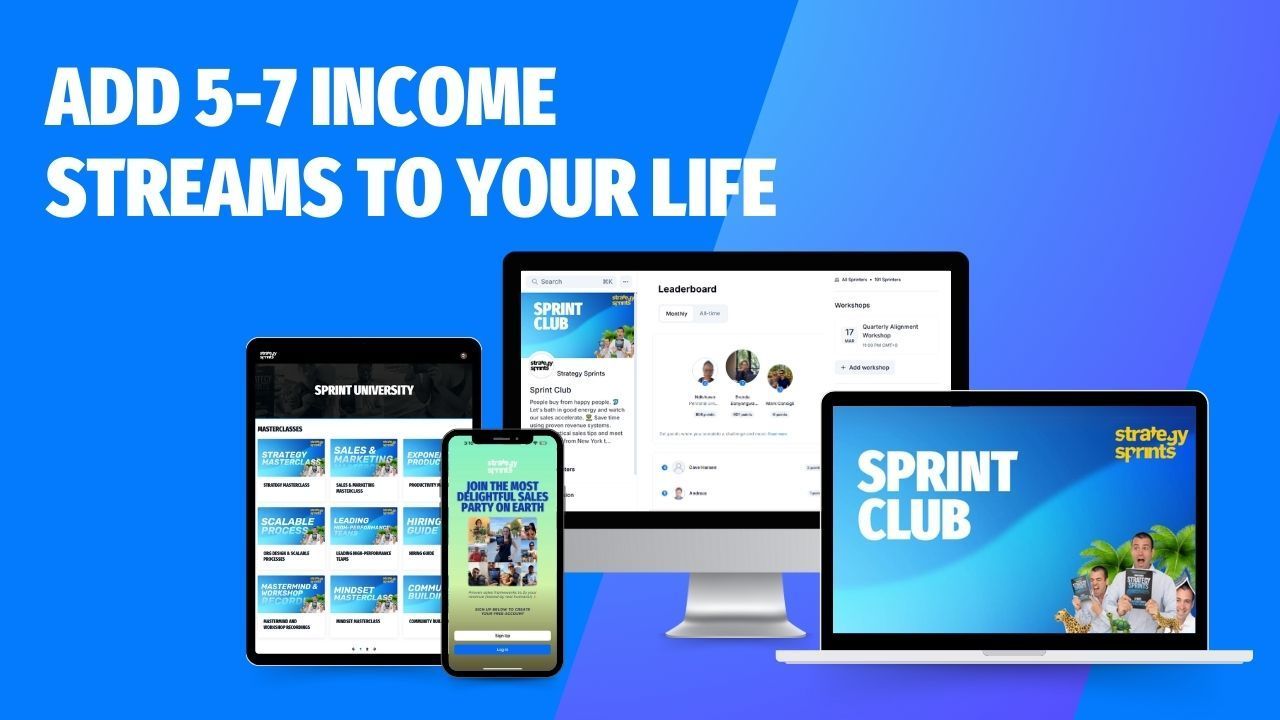
Want founders around you who help you lead every sales conversation? Join Sprint Club, 7 days free: https://www.strategysprints.com
Ready to accelerate now? Book a Discovery Call: https://calendly.com/strategysprint/discovery-call
Happy hunting.
Simon & The Sprinters 🐬⚡️🐆
Lead your next deal, first call to signature. 🌴
The 36 Sales Gaps Checklist: 36 places a deal dies, and the fix for each. Free, one page.
Free. You get the checklist, then more sales tools like it by email from Strategy Sprints. Leave in one click, any time.