How Do Consultants Increase Their Deal Size? Close Bigger B2B Deals
By Simon Severino, founder of Strategy Sprints, where 2,400+ B2B founders have gone through our programs. Updated November 2026.
Consultants increase their deal size by changing the order of the sales conversation, not the price list. The client first says what the problem costs them if nothing changes, then defines the outcome in their own words, and only then hears the investment. Scope the result, not your hours, and the same client signs a bigger engagement with less pushback. 🐬
What changes for you: you stop defending a day rate and start sounding like the advisor they trust, not the vendor they compare. You lead the conversation, the price sits next to a number the client said out loud, and the deal stops shrinking in the last meeting. A proposal in your words gets edited down. A scope in their words gets signed.
Why do consulting deals come in smaller than they should?
Because the price shows up before the value does.
The old way goes like this. A good first call, a lot of free advice, then "send me a proposal". You go home and guess the scope. You price it in days, because days feel safe. The client compares your days with another firm's days, asks for a smaller first phase, and saying yes feels like the only way to keep the work.
Notice where it went wrong. The client never told you what the problem costs. So your number had nothing to sit next to, and any number looked big. 🐯
That is the trap the whole consulting market runs on: time for money, priced before the client feels the size of the problem.
Count it once for yourself: your last three engagements. What did you scope on the first call, and what got signed? The gap between those two numbers is what the old order costs you, every quarter.
What is the right order to grow deal size?
We teach the 8 Steps of the Repeatable Sale. For deal size, five of them do the heavy lifting, and the order is the point:
- Step 2 Frustration. "What have you already tried? What didn't work?"
- Step 3 Importance. "How important is this, next to everything else on your plate this quarter?"
- Step 4 Cost of Inaction. "If nothing changes for 12 months, what does that cost you?" Then stay quiet. Let them chew on it and say the number.
- Step 5 Deliverables. "What would you need to see in the first 10 days to know this is working?"
- Step 6 Investment. Time first, then people, then money.
Then Step 7 Starting Date and Step 8 Statement of Work. If you skip Step 4, Step 6 becomes a negotiation. If you keep it, Step 6 becomes a comparison: their cost of doing nothing next to your fee. We go deeper on that comparison here: https://www.strategysprints.com/blog/bigger-deals-at-the-price-you-want-let-the-buyer-name-the-cost-first
What do I say to get the client to name the cost?
Word for word, these work on a call:
- "Walk me through the last time this problem hit you. What did it cost, in money and in time?"
- "If this is still here in 12 months, what's the number?"
- "Who else in the company feels it? Sales, delivery, your evenings?"
- "Is that the real number, or the polite one?"
Then write their number down, in their words. That one sentence is worth more than your whole slide deck. It goes into the scope, the proposal and the Statement of Work. 🌴
One rule: never say the number for them. When you name the cost, it's your opinion. When they name it, it's their decision.
How do I scope the outcome instead of my hours?
Hours invite a haggle. Outcomes invite a yes.
Swap the language of your scope:
- Not "12 workshop days", but "your new sales hires run the process without you on the call".
- Not "monthly retainer, 20 hours", but "pipeline reviewed every Monday, scored every Friday, for 90 days".
- Not "assessment phase", but "in 10 days you see where deals stall, in your own data".
Every line of the scope answers Step 5 Deliverables, in the client's own words. The client reads their own sentence back and thinks "yes, that's exactly it". That feeling is what makes a bigger number feel safe. 🐬
How do I price a B2B consulting engagement so it doesn't shrink?
Price against the outcome the client described, not against your calendar.
A simple way to do it:
- Start from their number. The cost of inaction they named in Step 4.
- Price a fraction of it. The test: the client should see the trade in one second, without a spreadsheet. If they need a spreadsheet, the scope is too vague or the problem isn't big enough yet.
- Offer three options, all built on the same outcome. A core option, a deeper one with more support (more people trained, more weeks, a coach on call), and a lean one with fewer deliverables, never the same deliverables for less money.
- Say the investment once, calmly, then hold the silence.
Illustrative math (made-up numbers, common shape): a client says stalled deals cost them about $400,000 a year. A $60,000 engagement next to that number feels like a decision. The same $60,000 sent cold in a PDF feels like a cost.
And if the client asks for a discount, don't cut the price. Cut a deliverable. That keeps your price honest and keeps you in control of the sales conversation. 🐯
How do I stop the deal from shrinking at the proposal stage?
Most deals shrink after the call, in silence, when the proposal goes stale in an inbox. Dixon and McKenna (The JOLT Effect, 2022) found that 40-60% of qualified B2B deals end in no decision at all. Not a lost deal. Just nothing.
Two moves stop that:
- Step 7 Starting Date before the proposal. "To which starting date are we committing?" A date, not "soon".
- Step 8 Statement of Work in their words. Their frustration, their cost, their deliverables, their date. Ready to sign, sent before the next meeting.
When the client reads their own words back on the page, there is very little left to negotiate down. 🌴
Does this work when I'm hiring my first salesperson?
Yes, and that's when it matters most.
If the order lives only in your head, your new hire sends proposals early and the deals come in small. Write the five steps and the four cost questions on one page. Score every call on Friday: did the client name the cost before the price? That one check protects your deal size while you hand the sale over.
Your one move this week: on your next first call, ask the 12-month question before you say a single word about price. Then write their answer down. 🐬
If your consulting firm gives away the answer on the first call, this article goes with it: https://www.strategysprints.com/blog/best-sales-coaching-for-consulting-firms-stop-giving-answers-away
FAQ
How can a consultant increase average deal size quickly? Add Step 4 Cost of Inaction to every first call, before any price. The client names what the problem costs, and your fee gets compared with that number instead of with another firm's day rate.
Should consultants charge by the hour or by the project? By the outcome. Hours invite haggling over time. A scope built on the client's own deliverables invites a yes on the result.
How do I ask for a bigger engagement without sounding pushy? Don't ask. Let the client describe the full size of the problem first. A bigger scope then comes from them, and you're simply matching it.
What should I do when a client asks for a discount? Keep the price and remove a deliverable. A lower price for the same work teaches the client your number was never real.
How many options should a consulting proposal have? Three, all built on the same outcome the client described. They choose how much support they want, not whether to work with you.
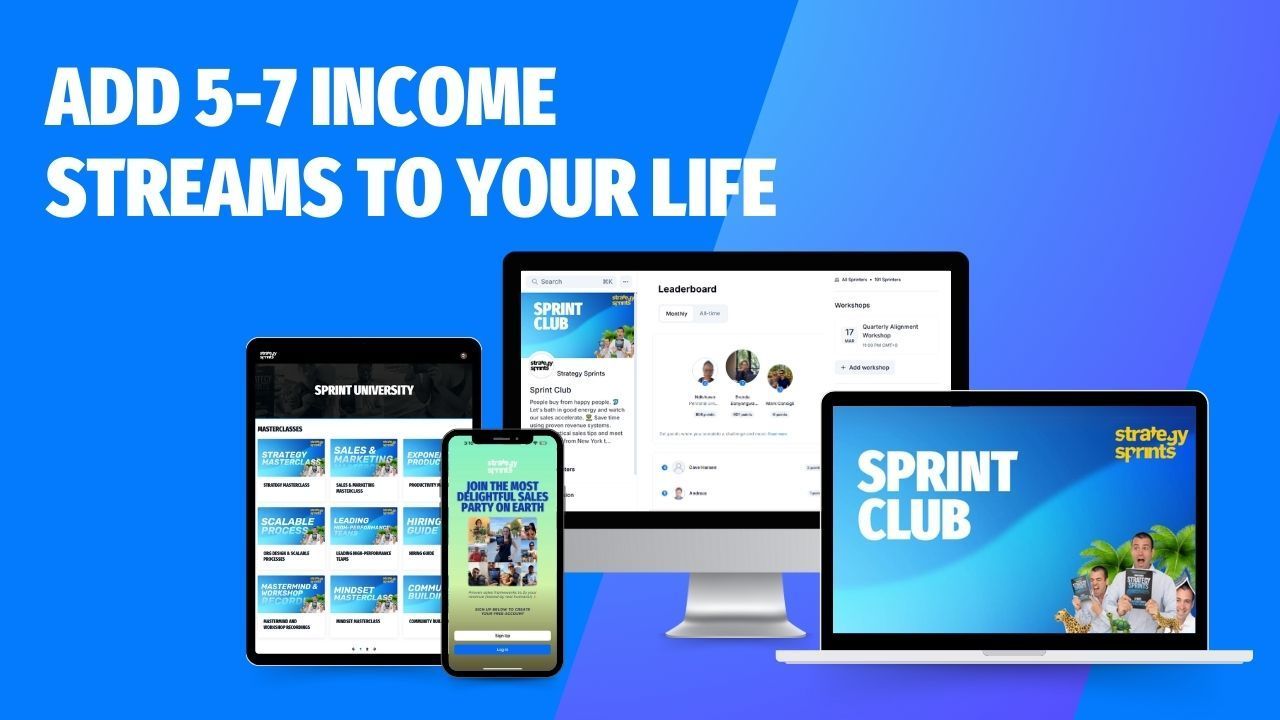
Want the tools, AI skills and a community of founders doing this work every week? Join Sprint Club, 7 days free: https://www.strategysprints.com
Ready to accelerate now? Book a Discovery Call: https://calendly.com/strategysprint/discovery-call
Happy hunting.
Simon & The Sprinters 🐬⚡️🐆
Lead your next deal, first call to signature. 🌴
The 36 Sales Gaps Checklist: 36 places a deal dies, and the fix for each. Free, one page.
Free. You get the checklist, then more sales tools like it by email from Strategy Sprints. Leave in one click, any time.