How to Get New Clients as an Expert: 3 Doors, 3 Referral Tests
"I was asking Claude, who are the top consultants I should speak to?"
That's what a new client told Peter Winick when Peter asked his usual question: how did you hear about us? "And we came up top," Peter told me. 🐯
Peter has hosted a podcast for nine years. 750 episodes. He's the co-author of The Thought Leadership Handbook. On this week's Sales Show I asked him the question every founder asks me sooner or later..
Where do your next clients actually come from? Especially when you need more leads, but you don't have time for marketing, because you're busy closing and delivering.
His answer is less exciting than a hack, and much more useful.
The 3 doors new clients walk through
Peter runs three channels. Every client comes through one of them.
- Inbound. Podcast episodes, articles, talks, all aimed at one specific audience. People see it, read it, listen, and reach out.
- Targeted outbound. People leave clues about who they are, what they're doing and what they're trying to do. Peter's team picks up on those clues and builds targeted campaigns, by email or on LinkedIn.
- A small, focused referral network. His words: "which might seem a little bit old school, but it's pretty effective." Who else serves the same people you serve? Who do those people trust, listen to and go to for advice?
Some of those partners he pays. Some pay him. Some just make the intro because it's right for the client. Reciprocity to compensation, and they're not mutually exclusive. 🌴
Each door gives the buyer a reason to talk to you before the first call.
Mine your recorded conversations for stories
Peter's team had 20 years of models, methods and frameworks. His view: nobody wants to read a book of those, unless you enjoy reading IKEA instructions. So he used what he already had: transcripts.
He started with about 30 episodes that shared a common thread and put them into chat. "This is showing me patterns that I didn't recognize." By the time the book started, the archive was 650 episodes and 2.3 million words.
He calls the AI "an army of interns." A research team of six to ten people, without the pizza bill.
And here's the line I want you to keep: "We never cut and paste any of that into the book, because that's garbage." 🐬
AI found the patterns. Then Peter went back to the guests: "We had this conversation four years ago, and you said X. Could you go further on that?" The stories came from real people. The AI just found them.
If you run sales calls, workshops or a podcast, you're sitting on the same raw material. Your best stories are already recorded.
3 tests every referral partner must pass
I asked Peter how he picks referral partners. Three tests, in this order:
- Firsthand experience. He has used them himself, or his clients have used them and had outcomes he can name. "If I can't look the client in the eye and say, that person is best in class.."
- Trust. They do what they say they're going to do.
- Best in class. "I wouldn't be proud to refer mediocre service providers to my clients."
Why so strict? Because every referral carries your reputation. If you introduce someone and they turn out sloppy, that's a ding on you, and nobody tells you. The bitter taste sticks to your name, not theirs. If they're sharp and helpful, even when no deal happens, your equity goes up. 🐯
Then make it easy. Peter's whole ask is one line: "Peter, meet Simon. He's working on this project. Would you mind talking to him?" Or a short call with the partner and their client. Whatever makes the referrer most comfortable.
Why Claude named him (it took 20 years)
Back to that client who asked Claude.
"That didn't happen in an hour, a day, a week. You could say, well, that started 20 years ago." The last year was the deliberate part: learning how the AI engines get fed, and making sure they can actually read what Peter's team publishes.
And no hacks. "You'll be the top of something one day.." and gone the next.
Most people use AI, and half the time they don't even know they're using it. "So you have to optimize for both if you want to be found."
Peter's picture for it: you publish a podcast or a blog, and the AI can't pick it up. It's like finishing this interview and me saying, "Peter, my microphone wasn't on." 🐬
On our side, an agent does this check. I built an SEO agent that searches how we show up and comes back with findings. I don't look myself. Two things it found:
- Our FAQ sections were built as segments the AI couldn't read. We turned them into plain text.
- Client testimonials were videos, with the text inside a thumbnail image. AI doesn't read that text.
Peter's answer: you're using AI to optimize how you're seen on AI. Because if you go all in for a month and then go back to running your business, "in 30 days, you're stale." 🌴
Everything is an experiment
Peter's filter for where to spend time, tokens and budget: "What doesn't change is what do we want to do. We want to cost-effectively acquire net new clients. Period. Full stop."
Everything else is an experiment. The direct mail best practices moved into email, and then "they worked until they didn't." Same with AI now. The principles of marketing haven't changed.
One example he loves: ask an agent to turn one recorded show into ten 90-second clips for social. Hours or days of a designer's time before. Seconds now.
When a prospect says "I'll just use chat"
Last week a prospect told Peter: "I get that you're best in class.. but I think I'm just going to use chat."
Peter didn't argue. He didn't discount. He didn't chase.
"OK, that's fine. I wish you luck. However, there's opportunity cost here." Think about the risks you take using chat instead of someone experienced. Think about what you'll miss. "And by the way, my instincts are there's a good chance we're going to talk again in six or nine months."
That's control of the conversation. 🐬 No begging. He let the buyer see what doing nothing costs. You don't have to win that call today. You just leave the door open, calmly. It's Step 4 of the 8 Steps of the Repeatable Sale, Cost of Inaction, in one sentence.
Your move this week
Pick the door you use least. Then do one thing:
- Referrals: write down three people who serve your buyers. Check them against the three tests. Send one of them the one-line intro offer.
- Inbound: open your recorded calls and find one story a client would want to hear.
- AI: ask Claude who the top people in your field are. If you're not named, check whether your FAQs and testimonials are readable text.
Fewer chases, more clients who already know why they're talking to you. That's how you get your evenings back. That's Sprintlife. 🐯
Watch the full episode: https://www.youtube.com/watch?v=H5hXusSPiEY
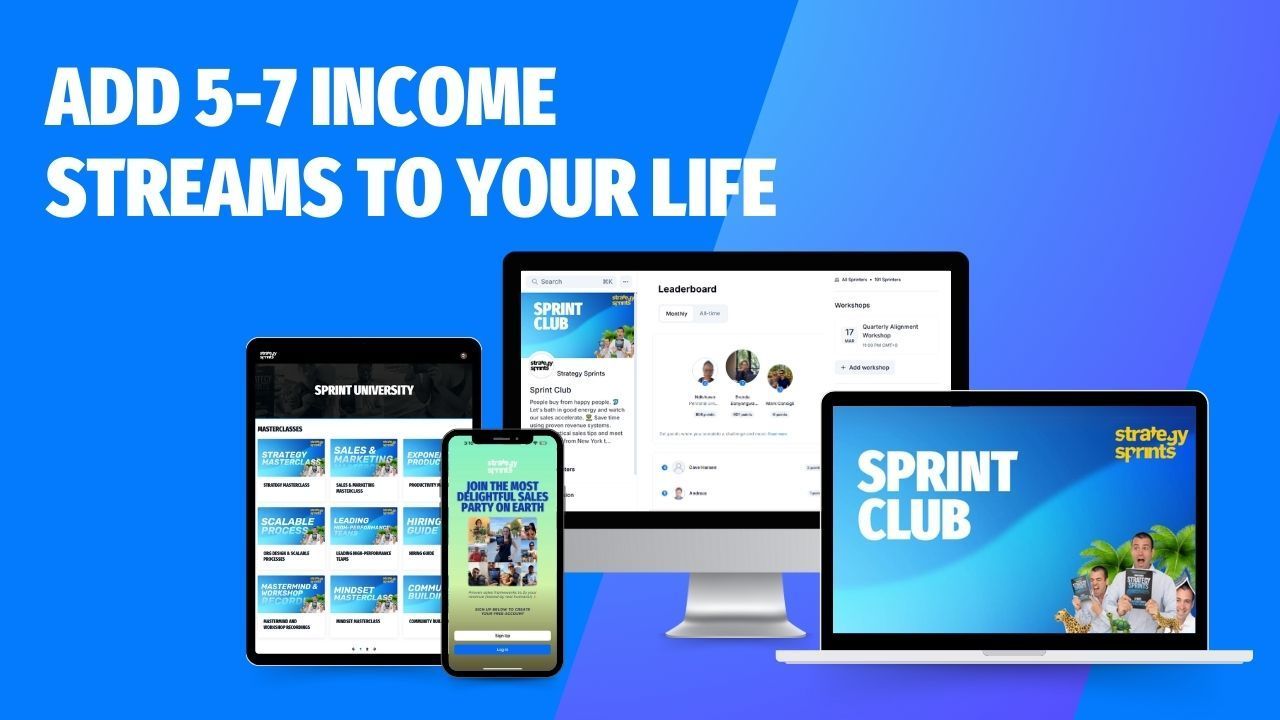
Want the 8 Steps of the Repeatable Sale, plus the tools and the people who push you through your current sales wall? Start your 7-day free trial of the Sprint Club: https://www.strategysprints.com
Ready to accelerate now? Book a Discovery Call: https://calendly.com/strategysprint/discovery-call
Happy hunting.
Simon & The Sprinters 🐬⚡️🐆
Lead your next deal, first call to signature. 🌴
The 36 Sales Gaps Checklist: 36 places a deal dies, and the fix for each. Free, one page.
Free. You get the checklist, then more sales tools like it by email from Strategy Sprints. Leave in one click, any time.