B2B Prospecting: Right Person, Right Moment, Right Reason
Ten more calls this week. Ten more messages. A new sequence, a new list. The pipeline barely moves.
When sales slow down, the reflex is volume. It feels like control. It isn't. More calls to the wrong people, at the wrong moment, for no real reason, just means more silence.
The fix is three questions you answer before you reach out, not after.
I talked this through with Paul Sweeney on The Business Behind Your Business (December 2024). Listen to the full conversation: The Business Behind Your Business with Simon Severino
The three mistakes behind a quiet pipeline
Paul asked what business owners get wrong in sales. I gave him three: "not talking to the right people, not talking to them at the right time, not talking to them for the right reasons."
It's one of the 274 templates we use with clients: right people, right moment, right reason. Get all three and B2B prospecting stops feeling like begging. Miss one and no amount of volume saves you.
Right person: define who gets a call, and who doesn't
Start with the ideal client, five levels deep. Not just industry and size. What do they dream about? What do they hate? Which tools do they love?
Then write the opposite: the anti-ideal client. If one of those criteria shows up, they don't get a call. Not to be harsh. You'd waste their time and yours.
It's tempting to skip this, because cutting anyone out feels like starving. On the show I said: "it's not true." I've been doing this 22 years, and "every year I became better at kicking out people." We made more sales every year, because we got clearer about who we serve, and the right clients got more room.
Then build a Dream 100: a list of the 100 people you'd most love to work with, with their LinkedIn URLs, in a spreadsheet or your CRM.
🐬 Fewer people. Much deeper work with each of them.
Right moment: the same message can land or annoy
Here's the example I gave Paul. I call him: "Paul, do you need better sales?" But he's at the grocery store with three kids begging for bubble gum. Right person, wrong moment.
Now picture a different week. Paul just started as sales director at a manufacturing company, and energy costs are high. A Google alert tells me. I send a short note: congrats on the new role, it's not easy, I'm curious how you're doing.
That connection request lands. As I told Paul: "80% take it because it's the right moment."
Moments are findable. A new role. A new hire. A funding round. A sales job posting. Set alerts for your Dream 100 and let the moment tell you when to speak.
Moments go stale fast. A congrats sent three months late reads like a template and leaves a bad taste. And if you don't send the note this week, someone else will.
Right reason: bring something they can use
Being on time is still not enough. You need a reason to talk that's about them.
In the example, I don't pitch. I move slowly, one step at a time. For two weeks I comment on Paul's posts. Then I send him something valuable about energy costs in his industry. "Now we have a reason to talk."
Same with what you sell. Paul's example was a website developer. Everybody needs a website, true, and AI can build one too. So the website isn't the reason. The question behind the question is: I want to be seen, I want my message to land, I want to be easy to buy from. Lead with that.
🐯 When the reason is theirs, you're not chasing. You're the one they want to hear from.
Half the calls, more sales
This is the part that sounds wrong until you try it. On the show I said: "even if you do half of the sales calls but you are talking to the right people at the right time for the right reason," you come out ahead.
It takes one hour a week of working on your sales process instead of in it. Paul put the alternative well: AI on a weak foundation just gets you to the wrong place faster.
And it makes outbound bearable. Rejection stings for everyone. When Paul and I recorded this, I was writing my next book. I'd sent proposals to 10 publishers and already had five rejections. "I don't feel great, I have to tell you." Fewer, better-aimed asks mean fewer of those days.
🌴 Less volume. More yeses. More energy left for the calls that count.
Start this week
Block one hour this week, then the same hour every week after. Do this before you send a single new message.
- Write five lines for your ideal client and five for the anti-ideal one.
- Pick 20 names for your Dream 100 to start. Put their LinkedIn URLs in one sheet.
- Set one alert per name for a moment: new role, new hire, new posting.
- Prepare one useful thing per moment: an insight, a number, a resource from their world.
Every week of volume without aim is another week of polite silence. Picture the other version: a short list, the right moment, a message they're glad to get, and a reply that starts with "funny you ask." From there, you're leading the conversation. That's how Sprintlife starts: control in sales, and the time freedom that comes with it.
Listen to the full conversation with Paul Sweeney: The Business Behind Your Business with Simon Severino
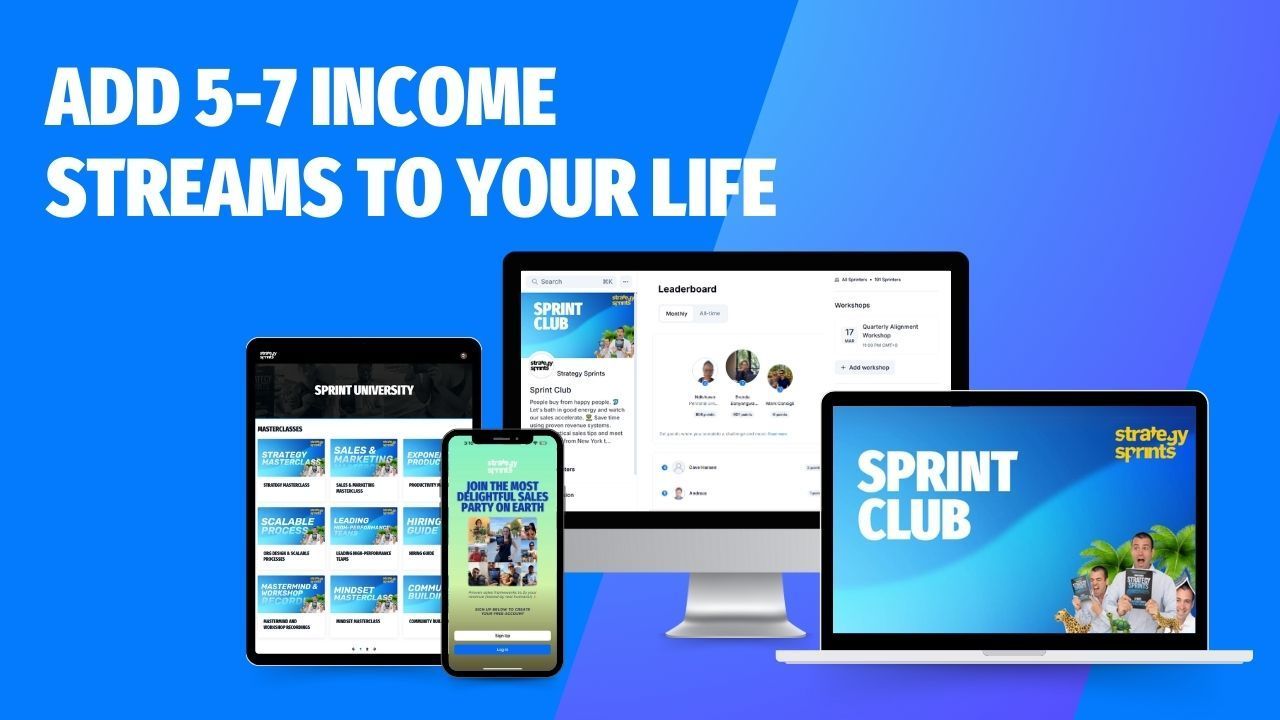
You don't have to build this alone. Grab the free tools and join the founders working on the same thing in the Sprint Club: https://www.strategysprints.com
Ready to accelerate now? Book a Discovery Call: https://calendly.com/strategysprint/discovery-call
Happy hunting.
Simon & The Sprinters 🐬⚡️🐆
Lead your next deal, first call to signature. 🌴
The 36 Sales Gaps Checklist: 36 places a deal dies, and the fix for each. Free, one page.
Free. You get the checklist, then more sales tools like it by email from Strategy Sprints. Leave in one click, any time.