Best B2B Sales Books: A 3x Bootstrapped Founder's Picks for Taking Control
Bigger deals. Your evenings back. That's the plan. Then the "let's talk" message goes out, and nobody books your call. 🐬
The offer can be strong and the calendar still stays empty. Melissa Kwan (founder of eWebinar, three times bootstrapped, a salesperson since she was 18) named the reason when she came on The Sales Show:
"When we're buyers, we want everything up front. But when we're sellers, we don't want to give you anything."
Buyers want everything. Sellers give nothing. So they never meet in the middle.. and the buyer goes to the competitor who gave the information first.
Later I asked Melissa which books she reads again and again. On her first pick she said: "not anymore, because I memorized it so well."
Three books came out of that answer. One she knows by heart. One for people who sell enterprise. One she had just read.
Her picks, her reasons. I add the line from each one to what we coach: control of the sales conversation. 🐯
Why the gate costs you control
The old playbook says control means getting the call. Melissa said it straight: "A lot of sellers feel like, if I don't have a conversation with the buyer, I am not in control."
I said it earlier on the show: "Nobody wants to talk. They want value. They want alpha. They want insights. They want solutions."
Melissa sees the same thing from the buyer's side. "I'm a vendor, but I'm also a buyer." You are too. Whatever you hide, the buyer researches anyway. "The first thing I'm going to do is how much is Simon's software. I'm going to ask that on the internet and somewhere in the internet, I will find that answer."
The sellers who are winning, she says, give buyers what they want. They have what she called an opportunity to "control the conversation," instead of letting buyers figure it out alone.
So you keep control by deciding what the buyer sees first, and in what order. All three books come at that from a different side.
Book 1: The Presentation Secrets of Steve Jobs, by Carmine Gallo
Melissa called it "the one sales book that I would recommend everybody." Then she took the sales label off it: "I would categorize it less as a sales book and more as like a psychology book."
Her one-line reason: sales is "just aligning what you want to say to what someone needs to hear." She said it had the biggest impact on her own communication and on how she thinks about structure.
Structure is control. The usual sales process puts the right things in the wrong order. The price lands before the buyer has said what doing nothing costs, so the price looks big.
Melissa showed what structure can do with the thing sellers guard most. "A demo can be whatever you make it to be." It doesn't have to show the product. It can be: here's who we are, here's the status quo, here's how we're different, this is who we work with. If you're interested, take a call.
Your move: write down the first 5 minutes of your last sales call. Next to it, write what that buyer needed to hear. Cut everything in the left column that has no partner on the right. 🌴
Book 2: Secrets of Question-Based Selling, by Thomas Freese
Her pick "especially for people who sell enterprise." Her reason, in one line: "It just explains how do you ask questions and do discovery to get to a close."
Whoever asks the questions leads the call. Neediness starts when you talk and the buyer sits back and judges.
That's why the middle of our 8 Steps of the Repeatable Sale runs on questions. Step 2, Frustration: "What's the frustration? What have you already tried?" Step 3, Importance: "How important is this in the context of everything else going on?" Step 4, Cost of Inaction: "What happens if you do nothing?"
Then you stop talking. You hear the cost in the buyer's own voice. When your price arrives at Step 6, it sits next to their number.
Your move: before your next call, write those 3 questions at the top of your page. Ask Step 4, then count to 5 in silence. 🐬
Book 3: The Power of Pull, by Rob Snyder
The one she had just read. "We think that sales is about convincing you to buy something, but it's actually about finding where demand already exists." Her one line: it's about how "to channel demand and not create it."
The premise, in her words: "demand exists regardless of supply." You want something because you're solving it today with something else. So you stop trying to convince someone who doesn't need it ("because you can never do that") and you go find "the people where it's weird not to buy your product."
Convincing is where begging comes from. Someone looking for pull isn't chasing anyone. You pick who you want to work with, you look at what they're already doing about the problem, and you tell them how you'd make it better.
Melissa lived the other version. At her last company she sold one-on-one to real estate companies. There were 100,000 of them and her time covered the top 200. "But everyone else is also prospecting on those 200 companies." The bulk of the revenue sat in the bottom 98,000 that nobody talked to.
Your move: take the last 10 names on your list. Next to each, write what they use today to solve this problem. Blank means no pull. Move your next hour to the names that have something written. 🐯
How she applies it: "push less hard"
I asked Melissa how she plans to use the book. Her answer: "push less hard." She knows she can be quite persistent. She also quoted Alex Hormozi, that every problem is a marketing problem, and landed here: "The most important thing is you stay on top of it and you stay top of mind and you're there when they need it."
Not silence, though. "You don't want to not follow up." And "are you ready to buy" goes stale fast ("kind of annoying," in her words). So here's the email she sends, and she says she means it:
"Listen, I don't want to bother you. So you just tell me if there's a better time to follow up or if this is just not something you care about."
More times than not, she said, maybe in two or three weeks they respond: there's some other priority, can you follow up the first week of December?
Her reason: "When they don't respond to me, it's not about me. It's never about me. It's about them."
That matches what I see. Of all the teams where we see the sales funnel, the ones with the best numbers right now are the ones with the longest email series. Six months. Eight months. 24 months. You don't know when the buyer is ready, so you build the relationship long enough to be the name they think of. 🌴
The number under all three: 300 vs 30
Melissa's sharpest line of the episode: "The biggest issue with sales is salespeople don't see revenue not gained as revenue lost."
When your demo button goes to a form or a calendar, "you don't know who bounces. You only know who comes in." She'd bet that on nine out of ten product websites, that button goes to a calendar.
Her own numbers: every month over 300 people come into her on-demand demo, and she says eWebinar doesn't get much traffic compared to red ocean products. "If I replace my demo button with a calendar, I would be lucky if I get 30."
Her estimate, her product. The point works for any seller. Remember Mailchimp? You used it for a week, you saw it worked, and you were in.
Here's the bitter part: those other 270 people never show up in your CRM, so nobody ever counts them as lost.
Your one move this week
Click your own demo button, like a stranger would. Land on a calendar? Record the plain version: who you are, the status quo, how you're different, who you work with. Put it in front of the calendar. Set it Monday. On Friday, count who watched it. It's also one piece of your sales process that no longer lives in your head, ready for the next sales hire you bring on.
Picture the next Monday. The people asking for your call have already seen who you are and how you're different. You lead with questions, they name the cost, and your price sits next to their number.
The chasing stops. The evenings that went to "just checking in" emails come back. That's a Sprintlife: the freedom to live your life on your terms, and a business that funds it. 🐬
Watch the full episode with Melissa: https://www.youtube.com/watch?v=eSiqNN05Gm8
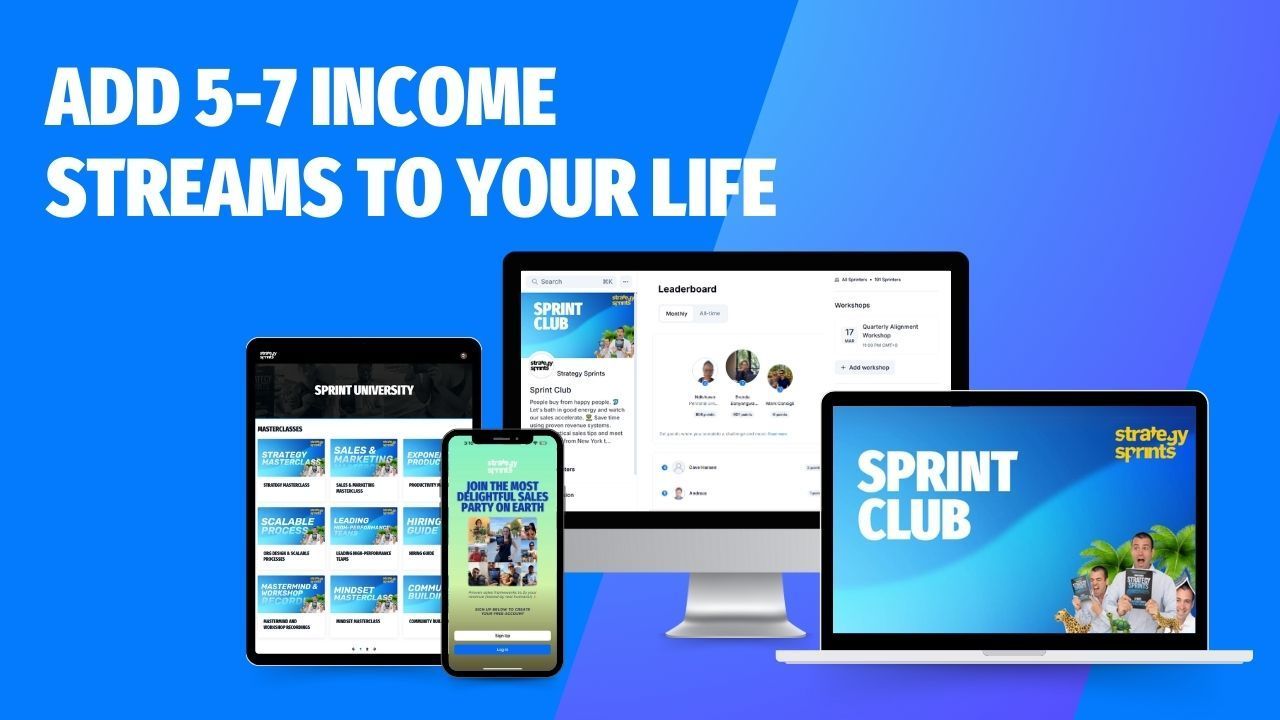
Want to practice that order with other founders? Start the 8 Steps inside Sprint Club, free for 7 days, no call needed: https://www.strategysprints.com
Ready to accelerate now? Book a Discovery Call: https://calendly.com/strategysprint/discovery-call?utm_source=blog&utm_medium=article_cta&utm_campaign=discovery_call
Happy hunting.
Simon & The Sprinters 🐬⚡️🐆
Lead your next deal, first call to signature. 🌴
The 36 Sales Gaps Checklist: 36 places a deal dies, and the fix for each. Free, one page.
Free. You get the checklist, then more sales tools like it by email from Strategy Sprints. Leave in one click, any time.