Everybody Wants to Win. If They Find a Safe Start, They Act.
Three years from now, anyone will be able to make anything.
A perfect proposal in ten seconds. A case study with charts. A video of a founder saying the right words in the right tone.. and the founder never recorded it.
When polish is free, polish stops meaning anything. 🌴
So what will your buyer use to decide?
One feeling: "I'm safe with this person."
Not your features. Not your slides. That feeling decides whether your next deal closes at your price or goes quiet. And it gets built, or broken, at every single interaction you have with a buyer.
Nobody buys in a vacuum
Your buyer didn't walk in fresh.
Maybe they hired the agency that burned six months of budget. Maybe the sales rep who looked great in the interview and closed nothing. Maybe the software nobody on the team opened after week two.
Those failures didn't only cost money. They cost them in front of their team. Their board. Sometimes at the dinner table at home. 🐯 That bitter taste doesn't wash out.
So every buyer carries a quiet record of what went wrong last time. And they bring it into every conversation with you, whether they say it or not.
Every buy is an insurance policy against the buyer's own failures from the past.
The question in their head isn't "is this product good?" It's this:
"How are you going to protect me from my own past failures, so from here on, I'm on a safe path forward?"
Answer that question and price gets small. Ignore it and no discount will save the deal.
Why prospects ghost after the proposal
You had a great call. They nodded. You sent the proposal.
Then.. silence. The proposal sits in their inbox and goes stale.
Most sellers read that silence as "not interested." It usually means something else: not safe yet.
The proposal arrived before the safety did. The price landed on a buyer who never got to say what failed before, and never said out loud what doing nothing will cost. So the proposal looks like one more bet. And they've lost bets like this before. 🐬
For you, every quiet proposal is weeks of work on hold and a forecast that slips a little further.
This is why the order matters. In the 8 Steps of the Repeatable Sale, Step 2 is Frustration: "What's the frustration? What have you already tried?" That's where the past failures come out. Step 4 is Cost of Inaction: "What happens if you do nothing?" That's where the buyer says, in their own words, why staying put is the risky option.
Only after that comes Step 6, Investment. And Step 8, the Statement of Work.
Skip the early steps and the buyer has to jump blind. Walk them in order and you hand them a railing.
Safer and safer, at every interaction
Trust isn't one big moment. It's a staircase.
Every touch either moves the buyer one step up, or drops them back to the bottom:
- You said you'd send the summary by Thursday. It arrives Wednesday. Up one step.
- You start on time and end on time. Up one step.
- You remember what they told you about the rep who didn't work out. Up one step.
- You chase them with "just checking in" three times. Back to the bottom. 🌴
By the time they decide, committing to your process should feel like the safest option in the world. Safer than doing nothing. Safer than the competitor. Safer than trying it alone one more time.
How you create safety: modeling and visualizing
You can't tell someone to feel safe. You have to show them. Two tools do it.
1. Modeling. Show the path, don't describe it. Let the buyer watch you do the work, live. Walk through exactly how the first week runs, who does what, what they'll see on Friday. When the buyer sees the process with their own eyes, it stops being a promise and becomes a plan.
In our own workshops, the AI advisors build the day live in front of the founders. Nobody has to trust a slide. They watch it happen. 🐯 2,400+ B2B founders have gone through our programs, and what convinces them is never a claim. It's the moment they see it work.
2. Visualizing. Help the buyer picture themselves on the other side. Step 1 of the 8 Steps is literally called Visualize: picture what the other person is saying, mirror their words, match their pace, then lead. Later, at Step 5 Deliverables, you ask: "What do you want to achieve in the next 10 days?" The buyer paints the picture in their own words. Now the future isn't yours, it's theirs.
That's why our Statement of Work is written in the buyer's words, not ours. When they read it, they hear their own voice. That's safety on paper. 🐬
Trust you can't fake (the AI-era version)
When AI can generate anything, buyers will look for what it can't. Put your energy here:
- Live proof over produced proof. A real call, a live demo, an unscripted conversation. Something that happens in real time with them in the room.
- Consistency over time. You did what you said in March, in June, in September. A pattern can't be faked in an afternoon.
- People who vouch for you. A referral from someone the buyer already trusts beats any testimonial on a website.
- A written process. When you can show the exact steps, the buyer knows the result doesn't depend on your mood or your memory.
- A scorecard. Show the numbers every week. What got done, what didn't, what's next.
Building trust in yourself as a person
Start with control.
A needy seller feels risky. Chasing, begging, discounting before anyone asked.. the buyer's alarm goes off: "Why does this person need this so badly?"
A calm seller who leads the conversation feels safe. You ask the questions. You let silence work at Step 4. You name a starting date at Step 7 without flinching. 🌴
That's the seller other founders quietly envy: the one whose deals hold their size, because buyers don't haggle over what feels safe.
Then keep your word in small things. The tiny promises are the ones buyers test first. Send what you said you'd send. Show up how you said you'd show up. Every week.
We run this on ourselves with Monday Strategy and Friday Learnings: set the week on Monday, score it on Friday, in black and white. A buyer who sees you measure yourself trusts you to measure their results too.
Building trust in your company
Personal trust has a ceiling: you. If every deal needs you in the room, the buyer is trusting a person, not a company.
Company trust comes from repeatability. The same 8 steps, in the same order, whether you run the call or your new sales hire does. The buyer gets the same experience every time. Same questions. Same follow-up. Same Statement of Work in their words.
That's also how you stop being the only closer. 🐯 A process a new hire can run is a process a buyer can trust.
Give them a safe start
Everybody wants to win. Your buyer wants the growth, the time back, the deal size they deserve. Wanting it was never the problem.
The problem is the jump. And burned buyers don't jump.
So shrink the jump. Give them a safe start: a clear first step, deliverables for the first 10 days they defined themselves, and a specific starting date. It smells like a fresh start, not another gamble. When the start feels safe, they act. 🐬
Picture that call. You lead, the buyer names the starting date before you do, and the Statement of Work they sign reads like their own notes.
Your one move this week
On your next sales call, before you say a word about you, ask:
"What have you already tried, and what happened?"
Then stop talking. Listen to the failures. Write down their exact words.
Those words are the map of what they need protection from. Build everything after that around it.
That's how you build trust when anything can be faked. Trust puts you in control of the conversation. Control plus time freedom is what a Sprintlife is made of: the freedom to live your life on your terms, and a business that funds it. 🌴
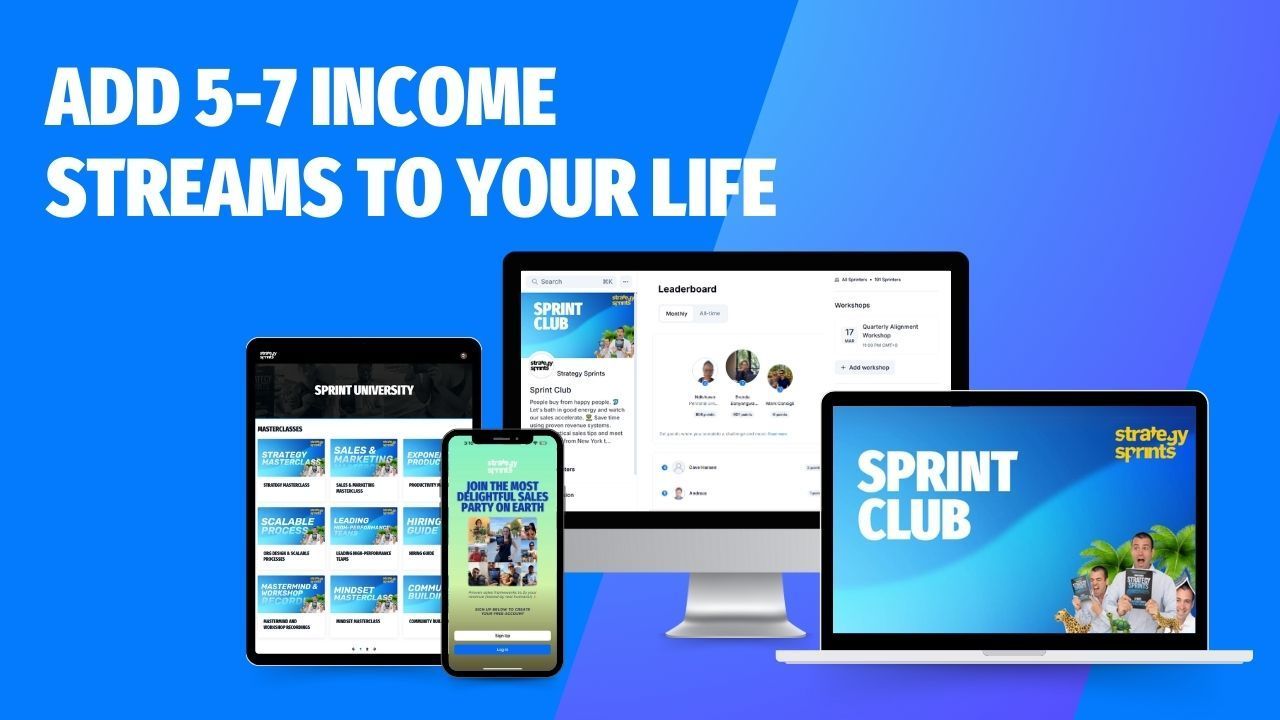
Want the tools, the AI skills, and a room full of founders who practice this every week? Join Sprint Club, 7 days free: https://www.strategysprints.com
Ready to accelerate now? Book a Discovery Call: https://calendly.com/strategysprint/discovery-call
Happy hunting.
Simon & The Sprinters 🐬⚡️🐆
Lead your next deal, first call to signature. 🌴
The 36 Sales Gaps Checklist: 36 places a deal dies, and the fix for each. Free, one page.
Free. You get the checklist, then more sales tools like it by email from Strategy Sprints. Leave in one click, any time.