How to Close a Deal: Marketing Opens, Sales Commits
Great call. The buyer laughed at your stories, nodded at your ideas, and said "let's stay in touch." You sent the deck that afternoon, feeling good.
Two weeks later, nothing. No reply, no next step. The thread goes stale. And that deal was already in your number for the quarter.
Here's what happened. The call was a marketing conversation from start to finish. Pleasant, open, and never built to turn into a sale. Marketing and sales are two different energies, and the close lives only in the second one.
I talked this through with Edna White on Keeping it Real on Purpose (December 2024). Listen to the full conversation: Keeping it Real on Purpose with Simon Severino
Marketing opens the door. Sales walks through it with you.
Edna asked me the difference between the two. My answer: "marketing is starting a conversation."
It sounds like this: here's what I see, are you curious to explore it with me? Light, open, no pressure.
Sales sounds different. "I see you, I see what you need to solve next, and I commit to split the risk with you." Then: let's do this.
🐬 One invites. The other commits.
Two energies, and most calls only carry one
On the show I put it this way: marketing comes from "an energy of curiosity and exploration." Sales is "an energy of commitment, intensification and partnering up."
Both matter. The trouble starts when a founder stays in curiosity mode for the whole call. Curiosity is pleasant, for you and for the buyer. Nobody feels pushed. And nobody decides anything.
So the buyer leaves with a nice feeling and no next step. The deal goes quiet, and you go back to chasing.
The founders who close without chasing aren't more charming. They switch energies on purpose.
Partnering up is where the money is made
Edna said a lot of her clients forget the partnering-up part. If you forget it, "you don't close the deal." As I told her: "that's the money making part."
Partnering up is the moment the buyer says yes, I'm going with you for the next three months. It doesn't arrive because you asked nicely at the end. It arrives because the whole call was built toward it.
That's why we teach the 8 Steps of the Repeatable Sale in order. Step 4, Cost of Inaction: the buyer says out loud what happens if nothing changes. Step 7, Starting Date: you agree on a real date, not "soon." Only then Step 8, the Statement of Work.
🐯 When the buyer has named the cost and the date, you're not chasing. You're leading. And the yes comes from them, not from your follow-up.
Commitment includes saying no
Edna tested me on this. She played a real estate client: 90 days is too long, can I just do one month?
My answer was no. We would not offer a month, because "that would be a disservice to you."
The reason is simple. It takes around 15 to 22 days to break the old way you do sales and marketing. Installing new habits takes up to 60 or 70 days. Think of training for your first half marathon. You can do it in 90 days. You can't do it in 30.
A month-long version would have closed faster. It also would have failed, and left a bitter taste on both sides. Saying no to it is part of the commitment, and buyers feel the difference. Control is the opposite of need.
Fix sales first, then turn up marketing
The order matters here too. In our 90-day Sprint, month one finds the bottleneck, simplifies the offer and improves sales. Month two makes it repeatable by writing it down. Month three adds marketing, "because now you have something that's working."
Turning up marketing before the close works means more pleasant calls that go nowhere. More conversations, same quiet threads.
🌴 Get the close right. Then invite more people to it.
How to close a deal: one change this week
Before every sales call this week, decide where the marketing part ends and the sales part begins. By Friday it's a habit.
- Give curiosity the first half. Explore their world, ask, listen. No pitch.
- Mark the switch. You'll feel the call shift when you say it out loud: Let me ask you something more direct.
- Let them name the cost. What happens if this stays the same for another six months? Then stay quiet.
- Ask for a date, not a feeling. Which starting date are we committing to?
Every call that stays in curiosity mode ends in "let's stay in touch." Picture the other version. The buyer names what waiting costs them, picks the date, and asks you what happens next. You're leading the conversation, and the follow-up is theirs to make. That's where Sprintlife starts: control in sales, and the time freedom it buys.
Listen to the full conversation with Edna White: Keeping it Real on Purpose with Simon Severino
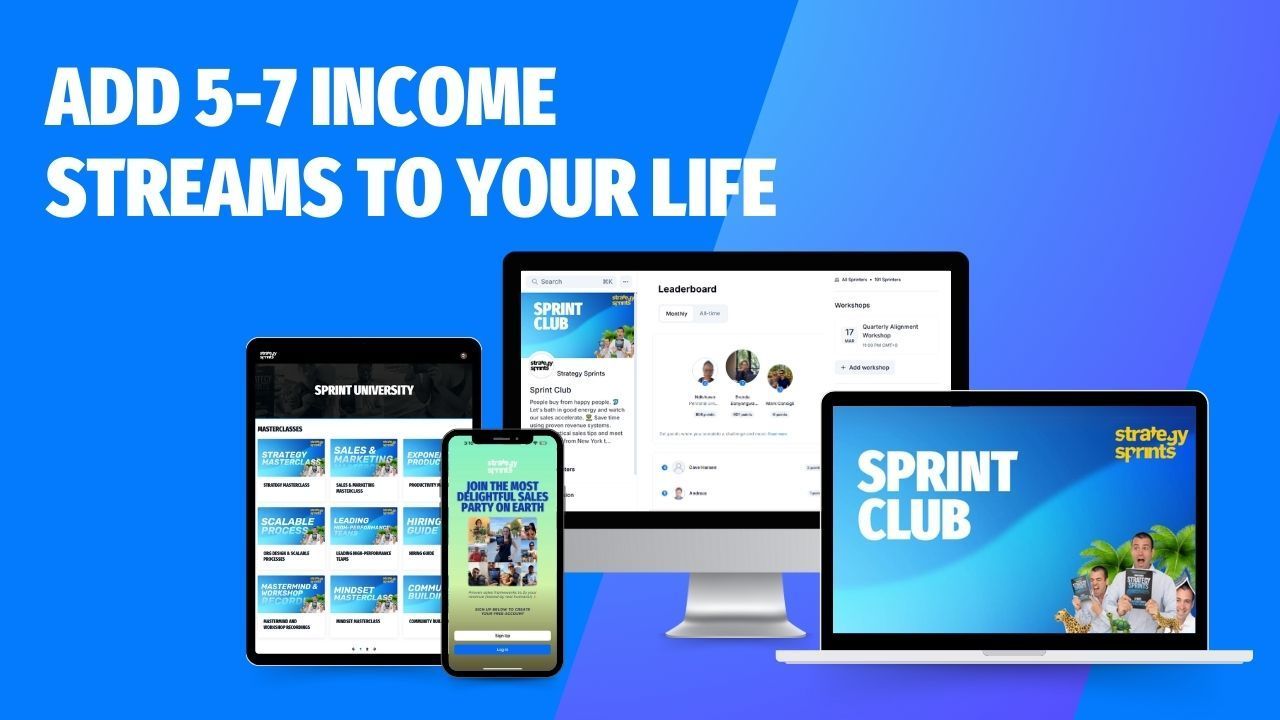
You don't have to build this alone. Grab the free tools and join the founders working on the same thing in the Sprint Club: https://www.strategysprints.com
Ready to accelerate now? Book a Discovery Call: https://calendly.com/strategysprint/discovery-call
Happy hunting.
Simon & The Sprinters 🐬⚡️🐆
Lead your next deal, first call to signature. 🌴
The 36 Sales Gaps Checklist: 36 places a deal dies, and the fix for each. Free, one page.
Free. You get the checklist, then more sales tools like it by email from Strategy Sprints. Leave in one click, any time.