How Do I Make Prospecting Fun Instead of a Grind?
By Simon Severino, founder of Strategy Sprints, where 2,400+ B2B founders have gone through our programs. Updated November 2026.
Prospecting becomes fun when you stop chasing strangers and start choosing people. Pick the founders you'd genuinely love to work with. Study what they're building until you see one specific way to make it better. Then reach out and tell them. Short list, real reason, no begging. The grind comes from volume without a reason. Fun comes from choice. 🐬
When you prospect this way, every message feels like an offer. And the calls that come back start warmer, because they came for a reason. 🌴
Why does prospecting feel like such a grind?
Picture Tuesday morning. A list of 200 names. A template with a first-name field, already stale. You hit send, refresh the inbox, and hear nothing back.
That silence has a taste. Bitter, and a bit humiliating.
The old way of prospecting is built on volume: more names, more sequences, more follow-ups. It treats people as rows. They feel it in the first line, so they ignore it. You feel it too, so you start to dread the hour you blocked for it.
There's a second reason. Most prospecting is needy. "Do you have 15 minutes?" "Just following up." "Any thoughts?" Every one of those lines asks for something and gives nothing. Asking all day without giving is exhausting. 🐯
And what you dread, you skip. Skip it this week and the pipeline goes quiet a month from now, right when you need it.
What actually makes prospecting fun?
Three things change the feeling completely.
- Choice. You decide who you want to work with. A short list of founders whose work you'd be proud to be part of.
- A real reason. You've looked at what they're building and you can name one thing you'd improve. Their sales process, their pricing, their first sales hire.
- Control. You're offering something useful, so you're not chasing. If they say no, nothing breaks.
Feel the difference? The grind is asking strangers for time. The fun version is telling someone you admire how their business could get better.
How do I choose who to reach out to?
Start with who you'd enjoy working with, then check the fit.
- Look for founders in the market you serve who are building something you find interesting.
- Look for a moment: they just posted a sales job, raised money, or hired their first sales leader. That's when an outside view is most useful.
- Read what they wrote. Their site, their last posts, the job ad. What are they proud of? What are they struggling with?
Keep the list short. Ten people you understand beat two hundred you don't. 🐬
You know the founder whose replies start with "How did you know?" That's what a specific reason sounds like on the other side.
What do I actually say in the first message?
One observation, one improvement, one easy next step. That's the whole message.
Here's the shape, with an illustrative example:
"Anna, your job post says the new account executive reports to you directly. That usually means the sales process still lives in your head. I'd write it down as steps your new hire can run from week one. Want me to show you how we'd do it?"
What you won't find in there: "Hope you're well." "I'd love to pick your brain." "Do you have 15 minutes?" Each of those asks. The message above gives.
Never fake it. Don't write "big fan" or "I've followed you for years" unless it's true. Show your interest with a specific observation instead. It's more believable anyway.
For channel-specific scripts, see the exact LinkedIn prospecting messages we use.
How do I stay consistent without burning out?
Make it a small daily game.
- Monday Strategy: pick this week's five people. One line each on why them.
- Daily, 20 minutes: one person researched, one message sent. Same time every day. Coffee in hand, door closed.
- Friday Learnings: score it. Who replied? Which observation landed? Double down on what worked, drop what didn't.
Small, fixed and measured is what makes it a habit. And habits stop needing willpower. 🌴
What happens when they reply?
This is where the fun really starts.. a conversation with someone you chose.
Lead it with the 8 Steps of the Repeatable Sale. Open with Step 1 Visualize (picture what they say, mirror it back). Then go into Step 2 Frustration: "What have you already tried?" Stay there a while. Ask Step 3 Importance and Step 4 Cost of Inaction ("What happens if you do nothing?") before you ever talk about price.
The buyer does most of the talking. You lead. That's what control of the sales conversation feels like, and it beats pitching into silence every time. 🐯
FAQ
How many prospects should I contact per day?
Fewer than you think. One well-researched person a day beats a blast. Quality of the reason matters more than volume.
Is cold outreach still worth it in 2026?
Yes, when it's specific. Generic outreach gets ignored. A message that names someone's real work and one improvement still gets read.
What if nobody replies?
Check the reason, not the volume. Score it on Friday: was the observation specific enough to be about only them?
Should I automate prospecting?
Automate the research and the reminders, keep the choice and the reason human. More here: how AI can automate B2B prospecting.
How do I stop feeling needy when I prospect?
Lead with what you'd improve for them, not what you want from them. Offering help is never needy.
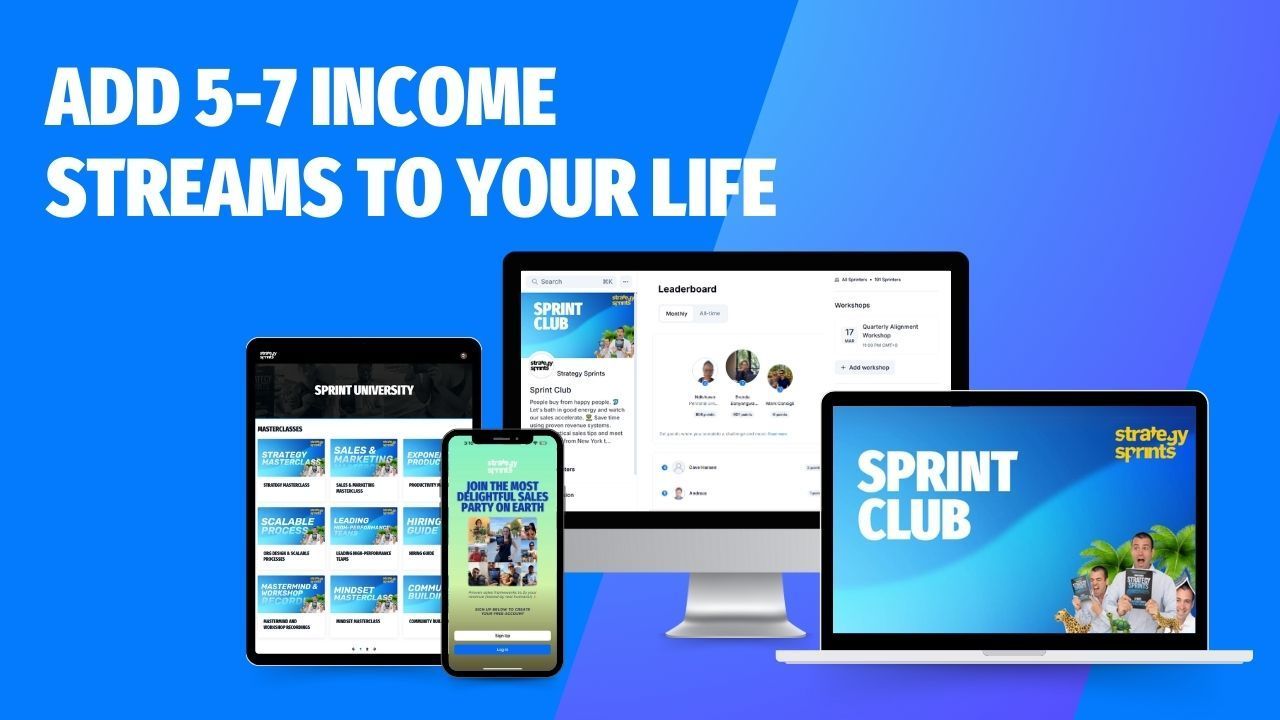
Want the tools and AI skills to research your shortlist faster, with founders who prospect this way every day? Join Sprint Club, 7 days free: https://www.strategysprints.com
Ready to accelerate now? Book a Discovery Call: https://calendly.com/strategysprint/discovery-call
Happy hunting.
Simon & The Sprinters 🐬⚡️🐆
Lead your next deal, first call to signature. 🌴
The 36 Sales Gaps Checklist: 36 places a deal dies, and the fix for each. Free, one page.
Free. You get the checklist, then more sales tools like it by email from Strategy Sprints. Leave in one click, any time.