How to Stop Giving the Price Too Early in B2B Sales
Twenty minutes into a good discovery call. The buyer is leaning in. Then: "Okay, but what's the price?"
You answer. Of course you answer. It feels rude not to.
And the call changes. The buyer stops talking about their problem and starts doing math. Your number sits there alone, next to nothing. A week later the deal is "on hold", or it comes back 20% smaller.
I talked this through with Brett Ingram on the optYOUmize podcast (June 2024). Listen to the full conversation: Double Your Sales with Simon Severino
Why the early price kills the deal
I get five or six sales recordings every week and give feedback on each one. The same three mistakes show up again and again. The third one costs the most money: telling the price too early.
The buyer asks under pressure, early, almost as a test. Beginners answer. Pros ask a question back: "in which stage of your decision making, are you right now?"
That's not dodging. It's honest. At minute 20 there is nothing to compare your number with. The buyer hasn't said what the problem costs them, so any number looks big. 🐬
There is no price, only an investment
Here's the reframe I gave Brett: "There is no price. There is an investment of time and investment of money."
An investment only makes sense next to two comparisons. First, what happens if you do nothing? That's Step 4 of the 8 Steps of the Repeatable Sale, Cost of Inaction. Second, what happens if you solve it another way: yourself, with someone else, later?
Then one more question: if we get this right, how does it change your life and your business?
Only after all of that do you name the investment. By then the buyer has put their own number on the problem. Your price sits next to their number, not alone. That's pricing power, and it comes from order, not from discounts.
Open every call with a mini contract
The first mistake in those recordings comes before price ever shows up. The seller starts the call without an agenda. Nobody says "this is what's going to happen".
So set it in the first minute. Here's what we'll cover. There are two possible outcomes: this is a fit, or it isn't. In both cases, here's what happens next.
It takes thirty seconds. It tells the buyer you've done this before, and that saying no is safe. That safety is exactly what lets them say yes later. It's also what lets you hold the price question until it belongs.
Raise the elephants yourself
The objections are always the same four. It's not the right time. What if it's not for me? What if it doesn't work? It's too expensive.
Don't wait for them. As I told Brett, "you start with the elephants in the room." Ask first: What else have you tried? What are you comparing this to? Could you do it yourself? Do you have a budget range in mind?
When you raise it, it's a conversation. When they raise it, it's an objection. Same topic, completely different feeling in the room. 🐯
Keep your talk time under 30%
If your product looks like everyone else's, the buyer has one thing left to compare: you. As a salesperson "the only thing that's in your control is the conversation itself."
The test is simple. Record your calls and check your talk time. Above 30%, you lose those deals to the seller who listens. Around 28%, the buyer is in the driver's seat. They talk, they decide, and you're the ally helping them decide well.
Because nobody likes being sold. "You can't close anybody. You can help them buy." When buyers talk their way through the problem, the cost and the starting date, they close themselves along the way.
Try it on your next call
- Open with the mini contract. Agenda, two outcomes, what happens after each.
- When the price question comes early, ask the stage question. "in which stage of your decision making, are you right now?"
- Get Cost of Inaction before Investment. Let the buyer say what doing nothing costs them, out loud.
- Raise the four elephants yourself. Time, fit, risk, money.
- Check your talk time afterwards. Over 30%? That's next week's one thing to fix.
Picture your next proposal going out after the buyer has named their own cost and agreed on a starting date. The number lands, they nod, and nobody asks for a discount. You led the whole call, without chasing once. That's Sprintlife: control of the sales conversation, and the time freedom it buys you. 🌴
Listen to the full conversation with Brett Ingram: Double Your Sales with Simon Severino
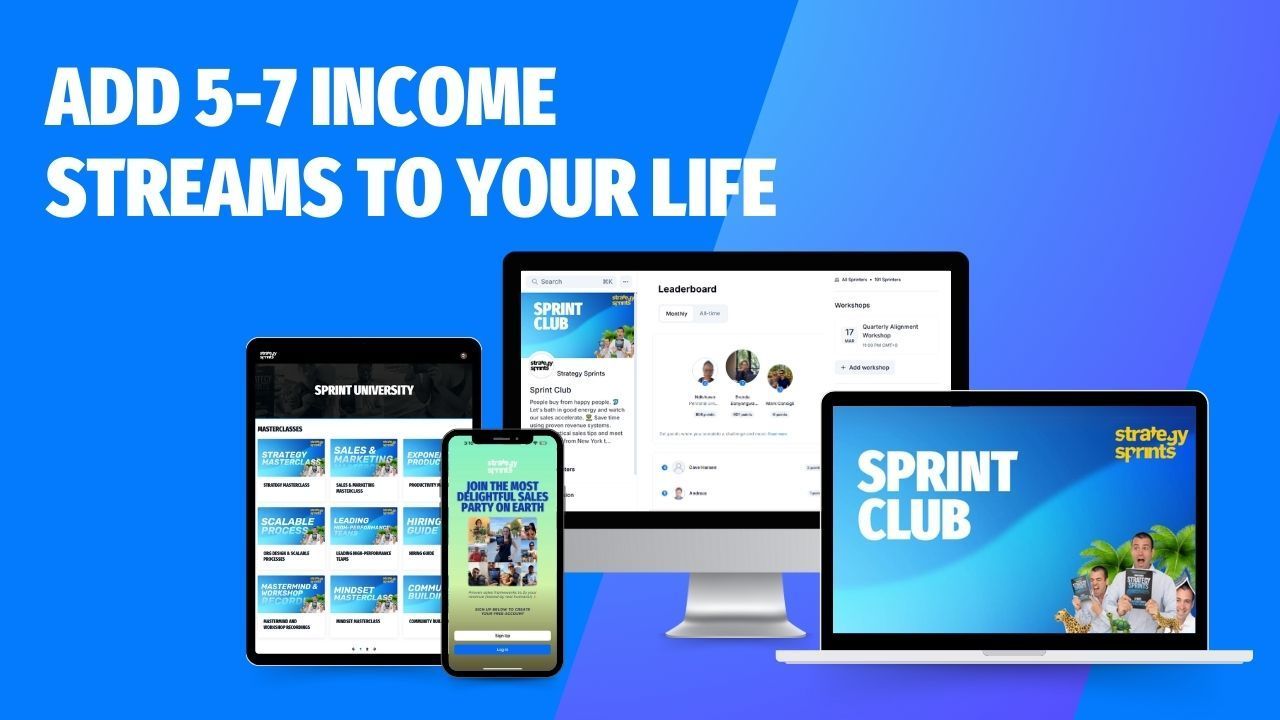
Practice the 8 Steps with other founders in the Sprint Club: https://www.strategysprints.com
Ready to accelerate now? Book a Discovery Call: https://calendly.com/strategysprint/discovery-call
Happy hunting.
Simon & The Sprinters 🐬⚡️🐆
Lead your next deal, first call to signature. 🌴
The 36 Sales Gaps Checklist: 36 places a deal dies, and the fix for each. Free, one page.
Free. You get the checklist, then more sales tools like it by email from Strategy Sprints. Leave in one click, any time.