Why Your B2B Sales Pipeline Is Stuck (And the One Step Most Deals Never Complete)
Why is my B2B sales pipeline stuck?
Usually because a step got skipped early, not because you need more follow-up. In most stalled deals the buyer never said the cost of doing nothing out loud (Step 4 of the 8 Steps of the Repeatable Sale), and price came up before time and people. The fix: next to each stalled deal, write the highest step the buyer completed in their own words, then ask them what they have already tried and what didn't work.
Updated October 2026
Your pipeline looks fine. The number at the bottom of the spreadsheet is bigger than last quarter. And nothing is moving.
That is the 2026 pattern in B2B. Buyers are not saying no. They are saying "let me loop in a few people," and then the thread goes quiet for three weeks. Cycles are longer. More people are in the room. Every yes now gets audited internally before it becomes a yes.
The standard response is to add volume. More prospecting, more demos, more follow-up. That makes the spreadsheet bigger and the stall worse.
Here is the bitter part, and it is worth chewing on: a B2B sales pipeline gets stuck at the finish line because it was already broken at the start. The stall is not the problem. It is the receipt.
We call the repair the 8 Steps of the Repeatable Sale, drilled with more than 2,400 B2B founders. Step 1 is Visualize: you picture what the buyer is describing, mirror their last three words, match their rhythm, and only then lead. If a deal is stalled, Step 1 was rushed and everything stacked on top of it was built on sand.
The repair for a deal stuck at Step 1 is not another email. It is a call where you say nothing new for the first five minutes: you repeat their last three words back, you match their pace, and you wait. If they do not open up, no later step will hold. Here is how to walk back through the rest and find the step that never actually happened.
Before anything: stop counting deals, start counting steps
Open your pipeline on a Tuesday morning, before the inbox fills. You already know which deals smell stale. Add one column. In it, next to every deal, do not write a percentage. Write the highest step number the buyer completed in their own words, out loud, unprompted.
Expect a gap. A deal can read 70% in the CRM and sit at Step 2 in reality. The pain was named in the room, but the seller named it, not the buyer. That gap is invisible in a percentage column and obvious in a step column.
Step 2: Reopen the frustration.
Ask the stalled buyer: what have you already tried, and what did not work?
Not "are you still interested." That question invites a polite exit. The frustration question invites a real answer, because people like talking about what failed them. You will hear the actual blocker inside two minutes.
Step 3: Test importance against everything else.
"How important is this compared with everything else on your plate right now?"
A deal does not stall because your offer got worse. It stalls because something else got more urgent. Ask the question and you get the truth: either it moved down the list (now you know), or the buyer hears themselves rank it high (now they know).
Step 4: Make them say the cost of doing nothing.
Step 4 is the one buyers most often never complete out loud. Step 1 is why they never got the chance. It is also the step that closes.
Ask: "What happens if you do nothing about this for the next six months?" Then stop talking. Count to ten in your head. The silence gets heavy, your hand drifts toward the mouse, and you say nothing. Do not rescue it. Do not answer for them.
A buyer who says the consequence out loud has sold themselves. A buyer who hears you say it is listening to a pitch. Same words, opposite outcome.
Step 5: Let the buyer define the deliverables.
"What do you want to achieve? Talk to me about deliverables for the next 10 days."
Ten days, not ninety. A ninety-day vision is a nice conversation. A ten-day deliverable is a decision. And whatever they say becomes the spine of the Statement of Work, written in their language, which is why it gets signed.
Step 6: Sequence the investment. Time, people, money. In that order.
When we audit a stalled deal, price almost always entered the conversation before time and people did.
Time first: how many hours a week can the team give this? People next: who is in the room? Money last. By the time you reach the number, the buyer has already invested twice, and the number lands as context instead of a shock.
Steps 7 and 8: Get a date, then send the SOW before the next meeting.
Step 7 is one sentence: "To which starting date are we committing?" A specific date. Not "soon," not "after the board meeting." Soon is how a deal dies quietly.
Then Step 8. The Statement of Work goes out via PandaDoc before the next call, ready to sign. Not a draft. Not "some thoughts." The document.
The standard sequence sends the SOW after the meeting, which turns a close into another follow-up cycle. Sending it first turns the meeting into a signature. If a proposal already went out and the line went dead, here is what to do when a prospect goes silent after your proposal.
What actually changed
Your market did change. Longer cycles, more people in the room, more internal scrutiny before anyone commits. What did not change is what fixes it. A tighter market punishes a skipped step faster. It does not require more leads. Run the steps in order and the same pipeline converts more, which is why the founders who drill this usually double revenue in 90 days.
What changes when you run the steps in order is who holds the frame. Chasing a stalled deal is what it looks like when the buyer is in control. Working one step at a time, in sequence, no skipping, is what it looks like when you are. That control is visible from across the table: the calm one in the room is the one running a sequence, not the one chasing a reply. It is the difference between a pipeline that reports well and a pipeline that converts.
Do this today. Open your pipeline, take the three deals that have been quiet longest, and write one number next to each: the highest step that buyer said out loud, in their own words. Then send that buyer one email asking what they have already tried and what did not work. That is the whole intervention. Then do it again next Tuesday. Three deals, one column, one question, every week, until the step column and the CRM finally agree.
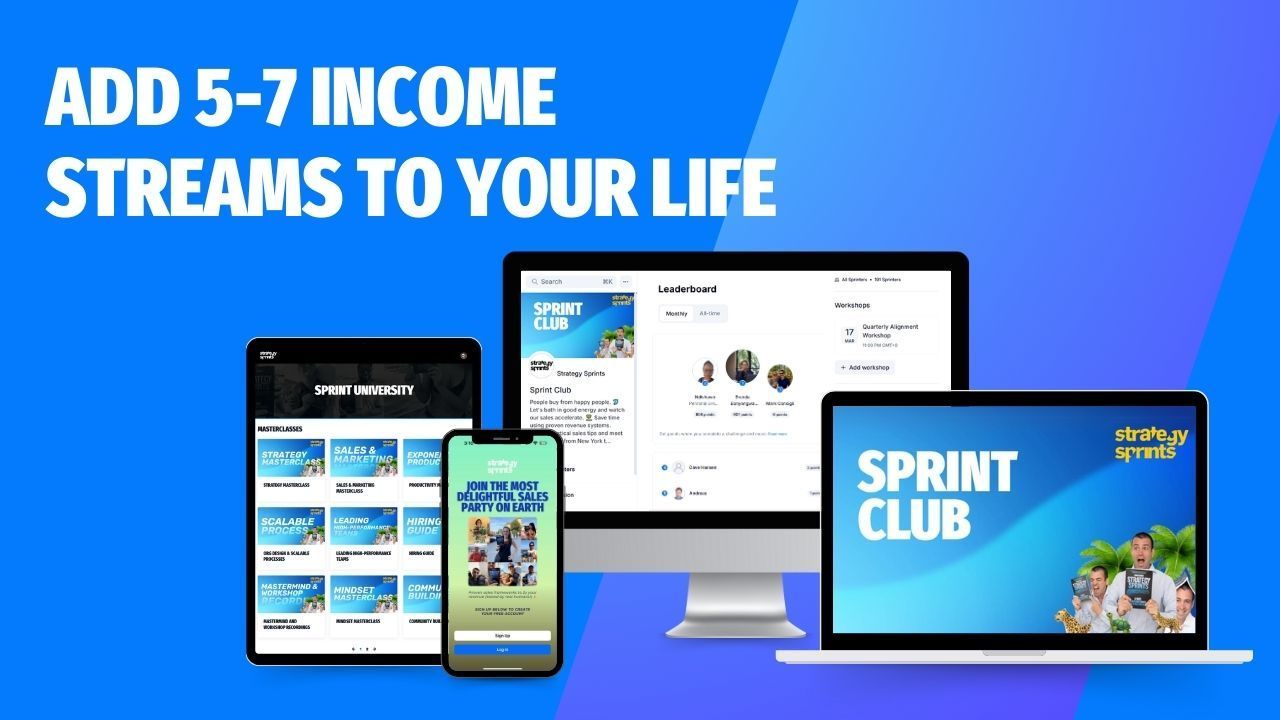
The 8 Steps, the drills, and the spotters who run them with you live inside Sprint Club. Seven days free, then $49 a month: https://www.strategysprints.com
Ready to accelerate now? Bring your three stalled deals to a 30-minute Discovery Call. We score each one against the 8 Steps, name the step the buyer never completed, and you leave with the exact question to reopen it. No pitch deck, no proposal: https://calendly.com/strategysprint/discovery-call
Happy hunting.
Simon & The Sprinters 🐬⚡️🐆
Lead your next deal, first call to signature. 🌴
The 36 Sales Gaps Checklist: 36 places a deal dies, and the fix for each. Free, one page.
Free. You get the checklist, then more sales tools like it by email from Strategy Sprints. Leave in one click, any time.