Will AI Fire You? Only If You're Needy.
AI isn't coming for every salesperson's job. It's coming for the needy ones first.
Not because AI is better at selling. Because if your entire value is volume of follow-ups and persistence, AI can do that a thousand times better than you can, for free. And here's what's changing right now: the AI tools your prospects are already using can read the tone and pattern of your outreach in seconds. Sound needy, with that stale, over-explained energy a prospect can smell from across an inbox, and the filter kicks in fast: move on to the next one.
Here's the scene, and you've lived it. A great call. The prospect is engaged, asks good questions, it feels right. You ask what's next, they say send me an offer, and you send it (which you should never do, but you send it anyway). Then you wait two days. Nothing. So you send an email: "Just checking in, wanted to see what's next." Ghosted. Another follow-up. Ghosted again. A week later: "I know you're busy, even a quick yes would be helpful." More needy with every message.
Feel what that sequence actually communicates. Not what you meant. What it says. It says: I need this more than you do. I have nothing else going on. You are my main priority. I am desperate.
The Real Problem Was Never the Follow-Up
Call after call, one pattern shows up more than any other: pipelines that look full on paper and closes nowhere. Thirty-something deals sitting there. Nothing moving.
Look at 90 days of stalled deals from any team stuck in this, and it's the same shape every time. Prospect goes quiet after the proposal. Salesperson follows up. Prospect goes quieter. Salesperson follows up again. More silence. Salesperson sends a breakup email. Prospect ignores it. Somewhere, on the other side of that same stalled deal, a competitor with a sharper posture is having a completely different conversation with the same prospect.
Ask the rep what the agreed next step was on a stalled call, and the answer is almost always some version of: "I told them I'd send over the proposal."
Did they commit to reviewing it by a specific date?
Silence.
That's the problem. Not the follow-up. The follow-up is a symptom. The real problem is that control was never established in the first place. No alignment, no agreement, no committed action. Without those three things, you don't have a sales process. You have a hope.
One thing to change on your very next call: before it ends, agree a specific next step with a specific date, out loud. Not "I'll send the proposal and you can look it over." Instead: "I'll send this by Thursday. Can we put 30 minutes on the calendar Friday at 2pm to go through it together?" You're not sending a proposal into silence anymore. You're sending it into a scheduled conversation.
Sitting in Their Boat
The fix isn't a better follow-up template. It's a different posture in the room.
If you get a meeting with a prospect, that meeting deserves to be taken seriously enough that you sit in their boat with them. If they're a team of nine people working a problem, you're the tenth person in that conversation, not a vendor circling outside it. You walk through what's happening right now, what they want, what they need, how to get there, and how to actually build the plan and execution to make it happen.
That's the difference between going in hoping and coming out waiting, versus going in with a process and coming out with a decision. Hoping and waiting were never a strategy.
The 8 Steps, and Three Questions for Each
We use eight steps to prepare for every real sales conversation, and for each step, three powerful questions ready to go. Step 2 is Frustration: what's actually broken, what have they already tried. Step 4 is Cost of Inaction: what happens if nothing changes, and you let them say it, not you. Step 5 is Deliverables: what does success look like, in their own words. Every step earns the right to the next one. Not to interrogate the prospect, but to find the root cause, the options they actually have, and the weighted criteria for their best decision.
At that point something shifts. You can feel the grip loosen on the old pitch-and-hope habit. You're no longer selling to them. You're two aligned people solving a problem together, with all the people in their ecosystem in view: the buyer, the vendors, the employees, everyone the decision touches.
The process doesn't feel rigid once someone is inside it. It feels like eight stepping stones across a river that's different every time. Each stone creates clarity. Each one they cross, they see further, they gain more options, and by the far bank, they're the one asking: "This call just ended. Can we schedule the next one?"
That's a sales conversation, not a chase.
Fix the Posture First
AI will amplify whatever posture you already have. A controlled, useful posture becomes ten times more powerful with AI behind it. A needy, repetitive posture just gets automated ten times faster into rejection.
Sweet and simple: fix the posture first. Then automate it, and watch the deals that used to go quiet start closing instead.
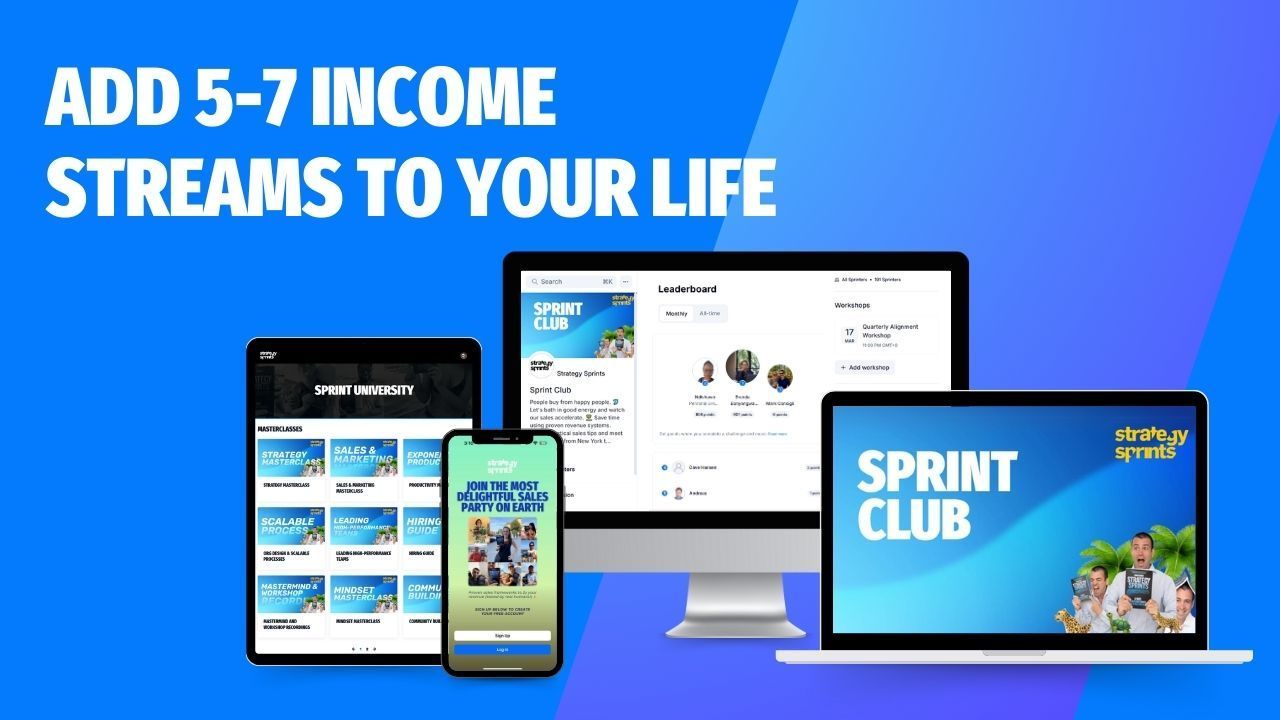
Try the full 8-Steps framework and the powerful-questions library free for 7 days, no risk. No credit card commitment, no sales call required to start.
Start here: https://www.strategysprints.com/
Lead your next deal, first call to signature. 🌴
The 36 Sales Gaps Checklist: 36 places a deal dies, and the fix for each. Free, one page.
Free. You get the checklist, then more sales tools like it by email from Strategy Sprints. Leave in one click, any time.