Growth Strategy & Sprints for B2B Founders: Why 90 Days Beats the Annual Plan
You want to double revenue. You want to stop being the only person in the company who can close. And you want your evenings back.
A growth strategy built on sprints gets you there faster than any annual plan. Below: what a growth sprint is for a B2B founder, why 90 days beats 12 months, and the weekly rhythm and sales engine that make it work. 🐬
It comes from what we have seen with 2,400+ B2B founders who went through our programs. And from the 2,000+ teams Simon coached before Strategy Sprints, including Google, BMW and Airbus.
Growth strategy & sprints: what a growth sprint actually is
A growth sprint is 90 days with one revenue goal, one owner, and one weekly rhythm to measure it.
That's it. No 40-page deck. No offsite that produces a binder nobody opens again.
Inside those 90 days you pick the few moves that grow revenue, you run them in the right order, and every week you look at the scoreboard and adjust.
Think of it like training for a race. You don't plan the whole year of workouts in January. You set the race date, you set the target time, and every week you look at the watch data and change the next week. 🐯
The same logic works for a B2B company between $3M and $10M. Your market moves too fast for a plan written 11 months ago.
Why 90-day sprints beat the annual plan
The annual strategic plan made sense when markets moved slowly. Today it mostly produces a false sense of control.
Here's what usually happens. The plan gets written in December. By March, a big deal slips, a hire doesn't work out, the market shifts. The plan quietly stops being true. Nobody says it out loud. The team keeps working hard.. on last year's assumptions.
A sprint fixes three things the annual plan can't:
1. Speed of learning. You get 13 weekly scorecards in one sprint instead of one yearly review. Thirteen chances to catch what's working and double down.
2. Focus. Ninety days is short enough that you can only chase one or two outcomes. That forces the hard choice about what matters now.
3. Urgency without panic. The finish line is close enough to feel. Your team can see it on the calendar. Energy goes up, not because anyone is shouting, but because the goal is real.
Annual goals still have a place. Keep the big number for the year. Then break it into annual strategic sprints: four 90-day sprints that add up to the year. Four chances to win instead of one long hope. 🌴
The weekly rhythm: Monday Strategy and Friday Learnings
A sprint without a weekly rhythm is just a shorter annual plan. The rhythm is what turns it into growth.
We use two short meetings. Every week. No exceptions.
Monday Strategy: set the week. Coffee in hand, 30 minutes, whiteboard or one shared page. What is the sprint goal? What is the one priority this week that moves it most? Who owns what? You leave the room knowing exactly what "a good week" looks like.
Friday Learnings: score the week. Numbers on the table. What worked? What didn't? What do we double down on, and what do we drop? You close the laptop on Friday afternoon knowing the score in black and white, not guessing.
Monday sets the intention. Friday scores the result. Next Monday adjusts based on what you learned.
This loop is simple on purpose. Simple is what survives a busy quarter. And it gives you something most founders never get from an annual plan: proof, every single week, that the company is moving. 🐬
The sales engine inside the sprint: the 8 Steps of the Repeatable Sale
Here's the part most sprint frameworks skip. Growth in a B2B company is revenue, and revenue comes from sales conversations.
If you are still the only closer, the sprint has a ceiling. And that ceiling is your calendar.
The real gap is rarely effort. It's control of the sales conversation. The old way of selling asks you to chase, pitch and follow up until the buyer gives in. That's the grind. It makes anyone sound needy, and buyers can feel it.
Control comes from doing the right things in the right order. That's the 8 Steps of the Repeatable Sale:
Step 1, Visualize. Picture what the buyer is describing. Mirror their last words, pace their energy, then lead. Trust first.
Step 2, Frustration. "What's the frustration? What have you already tried?" Let them open up.
Step 3, Importance. How important is this, in the context of everything else going on in their business?
Step 4, Cost of Inaction. "What happens if you do nothing?" Then stay quiet. Feel the silence. Let them say it out loud.
Step 5, Deliverables. The buyer defines success in their own words.
Step 6, Investment. Time, people, money. In that order. Never lead with price.
Step 7, Starting Date. A real date on the calendar, not "soon".
Step 8, Statement of Work. Sent before the next meeting, written in the buyer's own words, ready to sign.
When you run these steps in order, the conversation changes. No begging. No chasing. You lead, the buyer thinks out loud, and the yes comes from them. 🐯
This is what sprint sales looks like: the same steps, every call, scored every Friday. And because it's a process, not a personality, a new sales hire can learn it and run it without you in the room. That's how you stop being the only closer.
How to run your first 90-day growth sprint
Here is the simple version you can start this Monday.
Week 0: pick one revenue outcome. One number for the 90 days. Write it where the whole team sees it.
Week 0: find the leak. Look at your sales path from first attention to signed deal. Where do most opportunities stall? That stage is where the sprint starts.
Weeks 1 to 4: install the 8 Steps. Run every sales conversation through them. Record calls. Review them together on Friday.
Weeks 5 to 9: hand it over. Your salespeople run the steps. You join as a spotter, not the closer. Friday Learnings show whose calls convert and why.
Weeks 10 to 13: double down. Scale what worked. Drop what didn't. Set the goal for the next sprint.
That's a sprint strategy you can actually run. One goal, one rhythm, one sales process, in that order.
When founders run it this way, we usually see revenue double in 90 days. Not because anyone works harder, but because the right things finally happen in the right order. 🌴
Want to go deeper on the revenue side? Read https://www.strategysprints.com/blog/double-your-revenue-in-90-days. And for how a sprint is structured stage by stage, read https://www.strategysprints.com/blog/how-to-sprint-the-6-stages.
The real prize: Sprintlife
A growth sprint is not about working more. It's about the Friday afternoon when the scorecard shows the win, and you close the laptop with the weekend actually free.
It's the first call where your new hire leads, and the buyer says yes without you.
That's Sprintlife: control in sales plus time freedom, which comes back as money, thank-yous and purpose. The grind is optional. The adventure you started this company for is not. 🐬
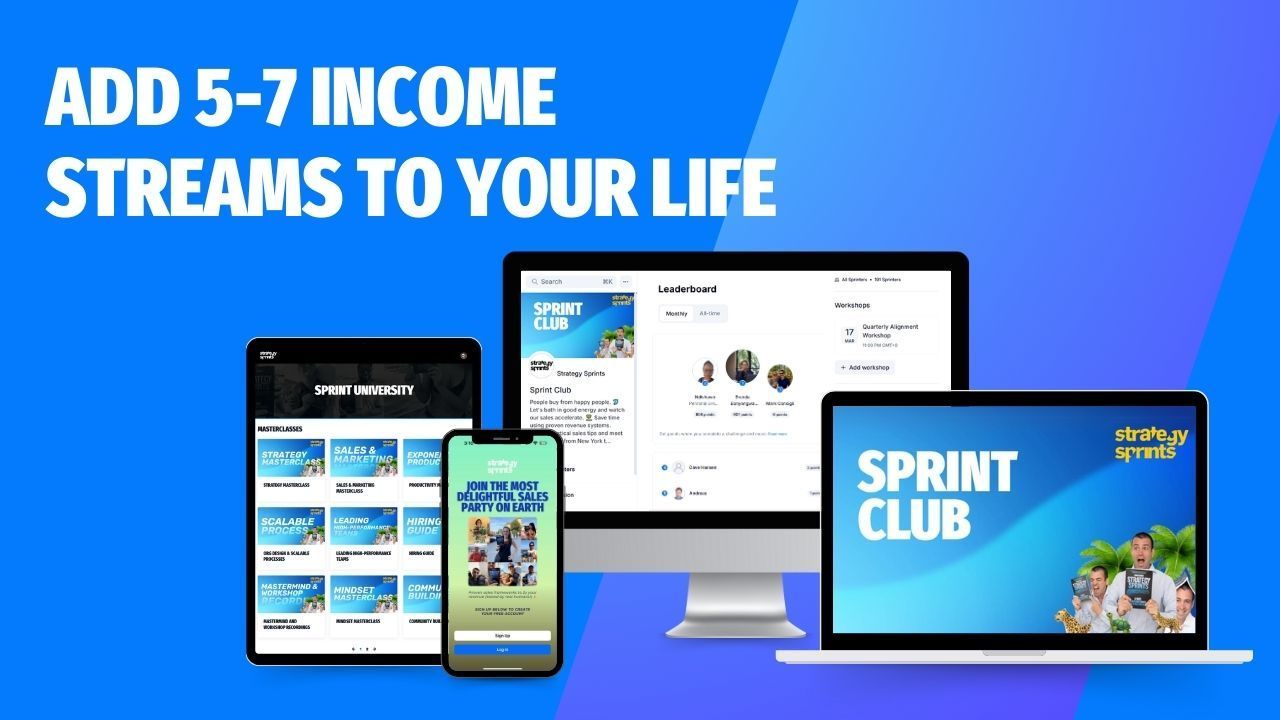
Want the tools, AI skills and the community? Join the Sprint Club: https://www.strategysprints.com
Ready to accelerate now? Book a Discovery Call: calendly.com/strategysprint/discovery-call
Happy hunting.
Simon & The Sprinters 🐬⚡️🐆
Get our expert sales tips delivered
By submitting you agree to receive our weekly Strategy Sprints Newsletter as well as other promotional emails from Strategy Sprints. You may withdraw your consent at any time via the “Unsubscribe” link in any email or view our privacy policy at ant time.