Sales Pipeline Review: Why Your B2B Deals Keep Slipping (and the 4 Questions That Fix It)
It's the end of the quarter. You open the forecast.
And there they are again... the same deals that were in last quarter's forecast. The buyer has a real problem. They keep telling you they'll buy. Then they don't. 🐬
Mike Muhlfelder (Partner at TechCXO, 30 years at Oracle, IBM and Jitterbit) joined me on The Sales Show this week for a straight review of exactly those deals. His answer: the deals aren't stuck because the buyer has no pain.
They're stuck because pain was the only thing anyone checked.
Pain is a signal. That's all it is.
For decades, salespeople have been taught to sell to pain. Find it, press on it, close.
Mike says that's a mistake. In his words: "Pain is a signal. And that's all it is. Humans don't change because they are in pain. Businesses for sure do not change because they are in pain."
He told the story from his own bed, a week after foot surgery.
Twenty years ago he broke his big toe doing martial arts with his son. He knew it was broken. He ignored it. Ten years later a doctor told him he needed big surgery, six weeks of recovery. His answer: "Yeah, we're not doing that. I can live with this."
The pain was about a two out of ten. Stub the toe and it swelled up bigger than a golf ball for days. He couldn't run or hike... but he could cycle, lift and fish. So he lived with it. For 19 years.
What finally moved him? Not more pain. An untenable situation. He couldn't drive without pain anymore. Sitting on the couch with crossed legs hurt. Every part of his day was affected.
That's your stuck deal. 🐯 The buyer has the pain. They've done the research. They can still live with it.
Why BANT and MEDDIC don't catch this
Most pipelines are qualified with BANT, MEDDIC or SPICED. Mike's point: those systems qualify the pain and the process. They don't qualify the action.
They don't tell you what happened, and why the business has to do something now.
So the boxes get filled in on the first call. Nobody goes back to ask more. And the deal sits... month after month, quarter over quarter, until it ends in "no decision" and the buyer just stops answering.
The question most reps skip
Here's the one Mike calls one of the biggest misses in B2B sales: competing priorities.
You've probably had this deal. The ROI is off the charts. They put in $1 million, they get $10 million back. And it doesn't close. You think: how can they not do this?
Meanwhile the CEO and CFO are looking at a $100 million project on the other side of the table. If they get distracted from it, it costs the business far more than your $10 million. So your deal waits for 2027.
This is Step 3 of our 8 Steps of the Repeatable Sale: Importance. Before cost of inaction, before deliverables, before price, you ask:
"How important is this in the context of everything else that's important to you right now?"
And then: "If you do this, which project won't get done?"
Most people skip it. That's the moment I stop being only consultative and become a challenger. When a founder tells me they want to hit a number by a date and their plan is cold email at half a percent conversion, I ask: how does this fit together?
Red light questions
Mike borrows a simple picture: green light, yellow light and red light questions.
Red light questions are hard to ask because they can blow up your deal. That's why reps avoid them. And it's why deals sit. Either you never asked the hard question, or you asked it, got a red light answer, and kept driving.
His example of a red light question, word for word:
"We've been talking about this for two weeks. You told me this project needs to go live on January 1. It's October 29th. It's not going to happen for January 1. What is the competing priority in the organization that's stopping this from moving forward?"
The answer either stops the deal or turns a red light bright green. Both are better than another quarter of pretending. 🌴
Your sales pipeline review: 4 questions for every deal
For every deal that isn't sitting in commit waiting for a signature, Mike's checklist:
- What happened? What was the trigger event that started this? ("If we don't fix this, we lose this customer.") There has to be a catalyst.
- Why does the business need to act now? What's the actual business problem, and is it big enough, organizationally and financially, to require action?
- Who owns the action? The answer should be someone with a C in their title or an SVP. Somebody with real authority.
- What are the competing priorities? Are those blockers real, and can you do anything about them?
Notice what's missing. Budget. Mike's view: don't ask about it.
When the blocker is real
If a deal has a real blocker you can't change (money, the organization, something your product can't do), take it off your forecast. Then tell your CFO, CEO and investors right away. Not at the end of the quarter. Not Monday.
Mike has lived the other version as a sales leader. He almost lost his job over a deal he said would close and didn't. Bad news has to be delivered, and delivered fast. The longer you wait, the worse it gets, whether you're a rep or a leader.
Your move this week
Open your pipeline today. Pick the three deals that were also in last quarter's forecast. Ask the four questions. If you can't answer "what happened?" for a deal, that's your first call tomorrow. 🐬
Watch the full episode with Mike here: https://www.youtube.com/watch?v=Vl85sDWgfHs
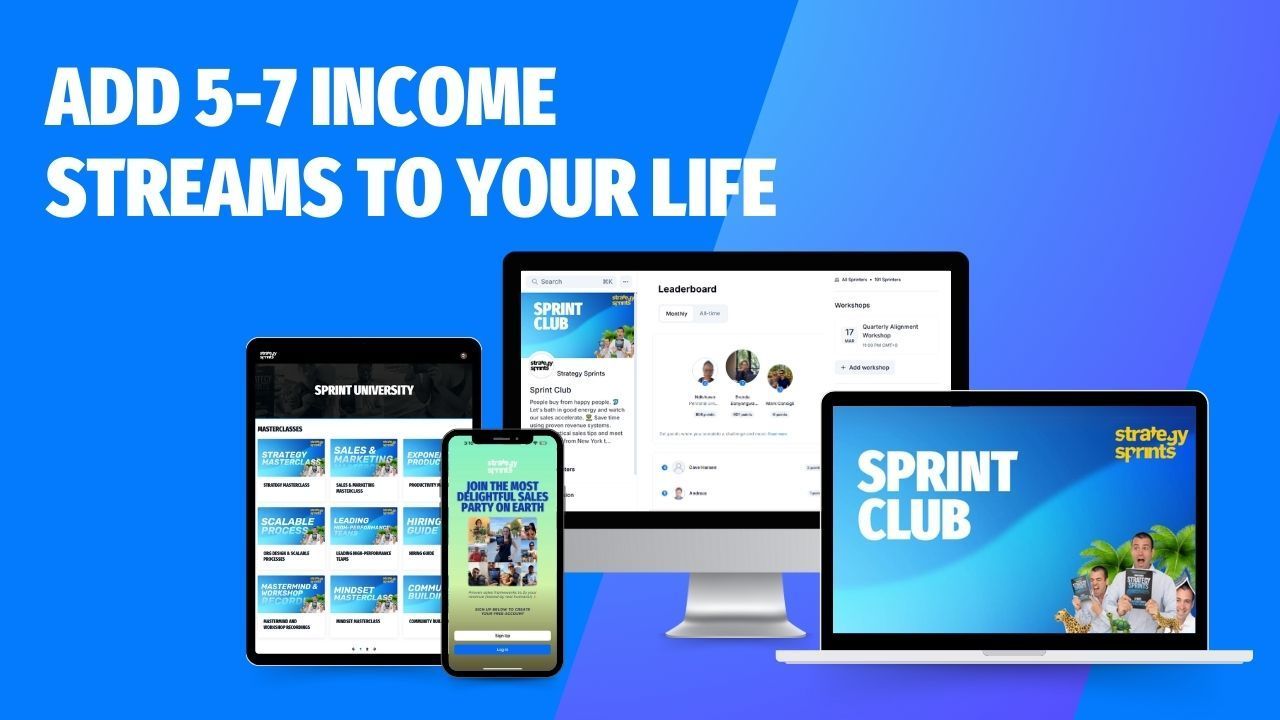
Want the tools and the weekly rhythm that keep your pipeline honest? Join the Sprint Club, 7 days free: www.strategysprints.com
Ready to accelerate now? Book a Discovery Call: calendly.com/strategysprint/discovery-call
Happy hunting.
Simon & The Sprinters 🐬⚡️🐆
Lead your next deal, first call to signature. 🌴
The 36 Sales Gaps Checklist: 36 places a deal dies, and the fix for each. Free, one page.
Free. You get the checklist, then more sales tools like it by email from Strategy Sprints. Leave in one click, any time.